
To shift your team’s focus from output to outcome, start by clarifying the strategic goals behind each task. Encourage your team to ask, “What’s the impact of this activity?” and regularly review KPIs that reflect real progress, like customer satisfaction or retention. Avoid measuring only activity, and instead, prioritize results that contribute meaningfully to your organization’s success. Keep these principles in mind, and you’ll open the door to more effective, impactful work.
Key Takeaways
- Focus on defining clear, measurable outcomes aligned with strategic goals rather than just completing tasks.
- Use KPIs that track meaningful impact, such as customer satisfaction or revenue growth, instead of activity metrics.
- Encourage teams to evaluate the purpose and impact of their work before starting new initiatives.
- Regularly review progress against strategic outcomes to maintain alignment and accountability.
- Cultivate a culture that values results and impact over simply finishing outputs or busywork.
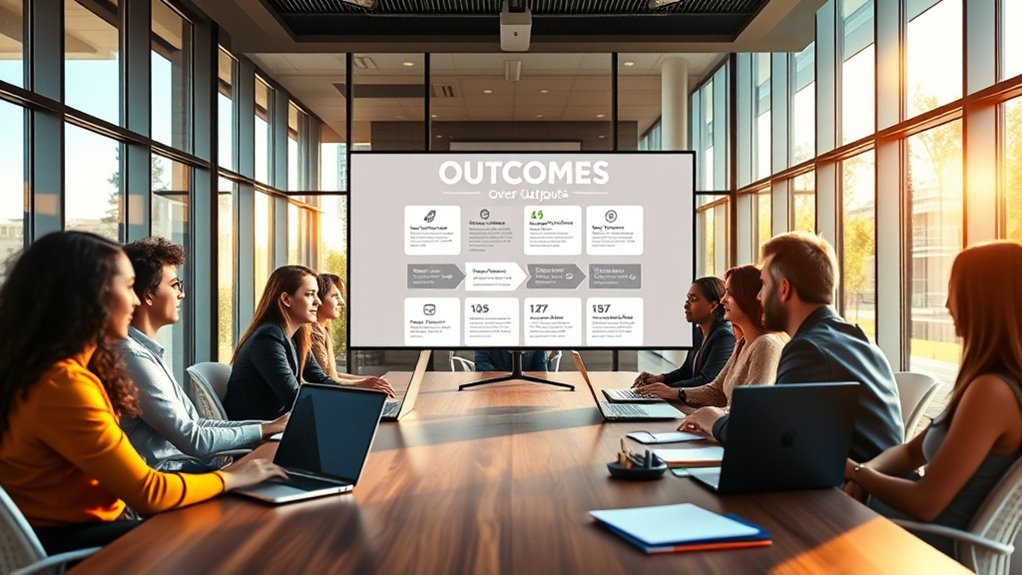
Have you ever focused so much on completing tasks that you lost sight of their true purpose? It’s a common trap in many teams: getting caught up in the busywork of outputs rather than the meaningful outcomes those outputs are meant to produce. When you prioritize outputs—like the number of reports delivered or features launched—you might feel productive, but you risk missing the bigger picture. Instead, shifting your focus toward outcomes ensures that every effort directly contributes to your organization’s success. This shift requires a conscious effort to align your team’s activities with strategic goals, emphasizing strategic alignment over simply ticking off tasks.
To do this effectively, you need clear indicators of success—metrics that measure real impact rather than just activity. That’s where KPI measurement comes in. Instead of tracking how many emails were sent or projects completed, you should measure KPIs that reflect progress toward your desired results. For example, if your goal is to improve customer satisfaction, KPIs might include customer retention rates or Net Promoter Scores. These measurements help you and your team understand whether your work is truly making a difference, rather than just fulfilling a checklist. By consistently evaluating KPIs aligned with strategic goals, you keep everyone focused on what truly matters, avoiding the trap of equating activity with achievement.
Aligning your team around outcomes also involves redefining success. Encourage your team to ask, “What’s the impact of this task?” before diving into work. This mindset shift helps prioritize initiatives that advance strategic objectives rather than just completing tasks for their own sake. Regularly reviewing progress against KPIs keeps everyone accountable and provides a clear picture of whether your efforts are translating into meaningful results. This approach fosters a culture where outcomes are valued more than outputs, and where success is gauged by progress toward strategic goals.

Fvergnsang Modern Rectangular Conference Table, Large Rectangular Seminar Meeting Table for 8-14 People, Modern Office Boardroom Desk with Cable Management & Thickened Desktop, No Chair (7.8FT, Wood)
【Executive-Scale Surface for High-Capacity Meetings】Spanning 13.1 feet in length, this conference table delivers an executive-scale workspace that comfortably...
As an affiliate, we earn on qualifying purchases.
Frequently Asked Questions
How Can I Measure Outcomes Effectively in My Team?
To measure outcomes effectively, you should focus on performance metrics that directly reflect your team’s strategic goals. Regularly track these metrics and compare them against desired results to gauge progress. Guarantee your team’s efforts align with strategic objectives, and adjust as needed. By consistently monitoring meaningful performance metrics, you can clearly see how your team’s work impacts overall success, keeping everyone focused on delivering valuable outcomes rather than just outputs.
What Are Common Challenges When Shifting Focus From Output to Outcomes?
Like steering a ship through fog, shifting your team’s focus from output to outcomes can be challenging. Common hurdles include misaligned performance metrics that still emphasize quantity over quality and accountability strategies that lack clarity, causing confusion. To navigate smoothly, you must recalibrate metrics to reflect true impact and foster a culture of ownership. Clear communication and consistent follow-through will help your team embrace this new course, ensuring they stay on track toward meaningful results.
How Do I Align Team Goals With Desired Outcomes?
You can align your team goals with desired outcomes by clearly defining performance metrics that measure success beyond just tasks completed. Communicate how each goal contributes to overarching objectives, ensuring everyone understands the impact. Regularly review progress against these metrics, adjusting goals as needed for better alignment. This approach keeps your team focused on meaningful results, fostering goal alignment and driving performance toward shared outcomes.
What Tools Assist in Tracking Outcome Progress?
Imagine you’re using a crystal ball from the 1800s—today, tools like performance metrics and feedback loops help you track outcome progress. You can utilize project management software, dashboards, or OKRs to monitor goals. These tools provide real-time insights, enabling you to adjust strategies promptly. Consistent feedback loops keep your team aligned, ensuring you’re focused on outcomes rather than just outputs. This way, you stay agile and goal-oriented.
How Can Leadership Encourage Outcome-Focused Culture?
You can encourage an outcome-focused culture by emphasizing performance metrics that highlight results, not just activities. Regularly communicate how individual and team efforts contribute to overarching goals, boosting employee engagement. Recognize achievements aligned with desired outcomes, and foster open discussions about progress. By setting clear expectations and celebrating success, you motivate your team to prioritize meaningful results over mere output, creating a culture where outcomes truly matter.
NOBLEASTURE 13.12FT Modern Meeting Room Table, Rectangular Conference Room Table for 8-14 People, Office Boardroom Meeting Tables with Cable Management, Walnut+Gray, No Chair (7.8FT, Wood)
【Spacious 13.1FT-Foot Table Seats Up to 14 People】This large conference table comfortably accommodates 14 people, making it the...
As an affiliate, we earn on qualifying purchases.
Conclusion
Focusing on outcomes rather than just outputs transforms your team’s success. When you prioritize meaningful results, you’re 25% more likely to boost engagement and satisfaction. Remember, delivering tasks isn’t enough—aim for impact. By shifting your focus, you’ll inspire your team to innovate and achieve more significant goals. So, next time you set targets, ask yourself: am I measuring just what’s completed or what truly matters? Your team’s potential is limitless when you lead with purpose.

Nuipesn 12FT Rectangular Conference Table (142" x 51"), Extra Wide Boardroom Meeting Table for 12-14 People, Dual Cable Management Grommets, 1.6" Thick Top, Light Oak & Gray
142" x 51" Massive Executive Workspace: Unlike standard tables that are only 47" wide, this premium conference table...
As an affiliate, we earn on qualifying purchases.

Tribesigns 12FT Conference Table, Modern Meeting Seminar Table for 12-14 Person, Rectangular Solid Executive Business Furniture Boardroom Desk for Office,(Set of 2, Dark Brown)
All Wood Construction: This rectangular conference table features a 1.18-inch thick solid tabletop and a sturdy double wooden...
As an affiliate, we earn on qualifying purchases.