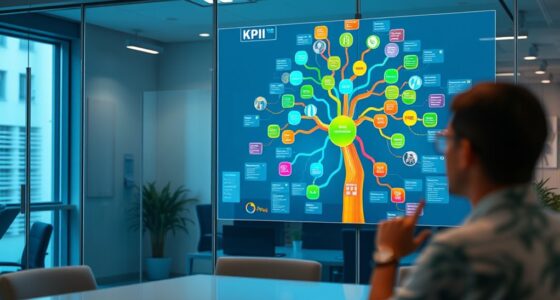
To improve continuously with Kaizen events, actively engage your team in identifying inefficiencies and mapping out current processes. Use tools like flowcharts or value stream maps to visualize workflows, uncover waste, and prioritize high-impact improvements. Encourage open participation to boost ownership and sustain momentum. This approach fosters collaboration, speeds up problem-solving, and builds a culture of ongoing enhancement. Keep exploring how these strategies can transform your organization for lasting success.
Key Takeaways
- Employee engagement in Kaizen events encourages active participation and ownership of process improvements.
- Process mapping visualizes workflows, identifying waste and inefficiencies for targeted improvements.
- Using tools like flowcharts enhances team collaboration and clarity during continuous improvement efforts.
- Involving employees reveals actionable insights, fostering a culture of ongoing feedback and refinement.
- Effective Kaizen strategies lead to faster problem-solving, improved quality, and sustained operational excellence.
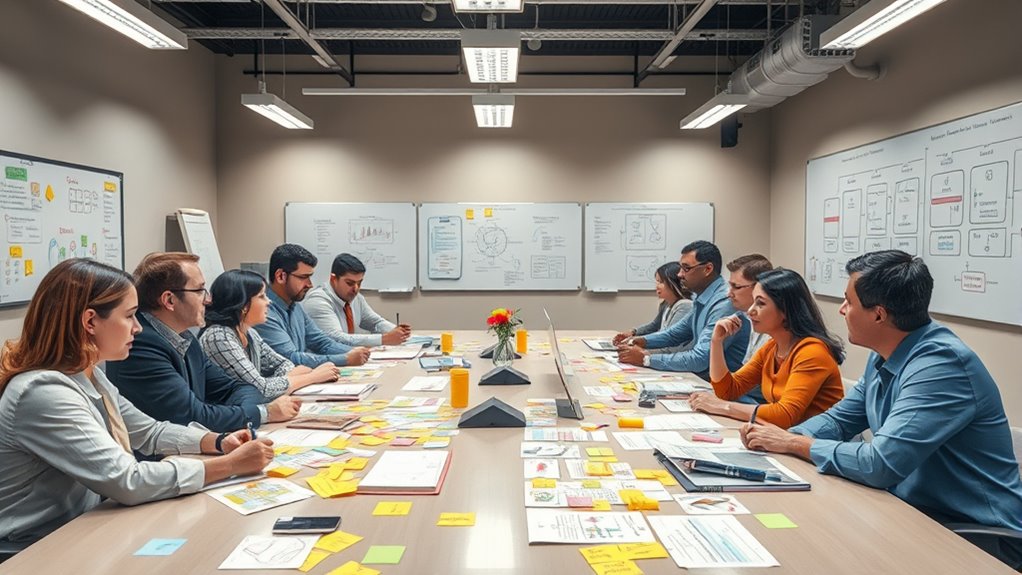
Have you ever wondered how organizations achieve rapid improvements in efficiency and quality? The secret often lies in well-structured Kaizen events, which focus on continuous improvement through targeted efforts. When you’re involved in a Kaizen event, one of the first steps is to boost employee engagement. Engaged employees are more motivated to identify issues, suggest solutions, and actively participate in change initiatives. Their firsthand knowledge of daily processes makes them invaluable in uncovering inefficiencies that might otherwise go unnoticed. To maximize this engagement, it’s essential to create an environment where team members feel their contributions matter and that their voices are heard. This sense of ownership not only accelerates problem-solving but also sustains improvements over time.
Another critical element of a successful Kaizen event is process mapping. When you map out processes, you visually lay out each step involved, making it easier to spot redundancies, bottlenecks, or unnecessary activities. Process mapping acts as a diagnostic tool, helping you understand the flow of work and identify areas where waste or delays occur. By thoroughly analyzing these visual representations, you and your team can prioritize which issues to address during the event. This clarity ensures that efforts are focused on high-impact improvements rather than scattered or ineffective changes. Furthermore, process mapping fosters a shared understanding among team members, aligning everyone’s perspective and encouraging collaborative problem-solving. Incorporating tools such as flowcharts or value stream maps can further enhance understanding and pinpoint opportunities for elimination of waste.
During a Kaizen event, involving employees in process mapping not only reveals opportunities for improvement but also enhances their engagement. When team members see their insights translated into tangible changes, they develop a sense of accomplishment and commitment to the process. This participatory approach creates a culture of continuous improvement, where everyone feels responsible for maintaining the gains achieved during the event. It also encourages ongoing feedback and refinement, ensuring that improvements are sustainable rather than one-off fixes.
Ultimately, the success of a Kaizen event hinges on your ability to foster employee engagement and leverage process mapping effectively. These strategies make it easier to identify root causes, develop practical solutions, and implement changes swiftly. When employees are actively involved and processes are clearly understood, improvements happen faster, and the organization moves toward higher efficiency and quality. Remember, continuous improvement isn’t a one-time effort; it’s an ongoing journey that thrives on collective effort, clarity, and a relentless focus on getting better every day.
Frequently Asked Questions
How Long Does a Typical Kaizen Event Last?
A typical Kaizen event lasts between 2 to 5 days, depending on its scope. You’ll want to plan the event’s duration carefully within your planning timeline, ensuring enough time for thorough analysis and implementation. Shorter events focus on quick wins, while longer ones allow for deeper improvements. Keep in mind, effective planning helps maximize results within the scheduled event duration, so allocate time wisely for preparation and follow-up.
Who Should Be Involved in a Kaizen Event Team?
Imagine assembling a team like the A-Team for a mission—you should include cross-functional collaboration members, such as frontline workers, managers, and operators. Leadership roles are crucial to guide the process and guarantee commitment. By involving diverse perspectives, you foster innovation and buy-in. Everyone from process owners to subject matter experts should participate, making sure the team’s efforts lead to continuous improvement and effective solutions.
What Industries Benefit Most From Kaizen Events?
You’ll find manufacturing and healthcare industries benefit most from Kaizen events. In manufacturing, these events boost efficiency by streamlining workflows and reducing waste. Healthcare teams use Kaizen to improve patient care processes and reduce errors. By actively engaging staff, you can identify inefficiencies quickly and implement small, effective changes that lead to significant improvements in productivity and quality. This continuous improvement approach keeps your operations adaptable and competitive in these sectors.
How Do You Measure Success After a Kaizen Event?
A picture is worth a thousand words, so you should look at the results closely. You measure success after a kaizen event by reviewing key performance indicators (KPIs) and conducting a post-event review. Track improvements in productivity, quality, and waste reduction. If KPIs show positive trends and team feedback confirms enhanced processes, you’ve successfully achieved your goals. Keep monitoring these metrics to sustain continuous improvement.
Can Kaizen Events Be Repeated Frequently?
Yes, you can repeat Kaizen events frequently to support continuous improvement. Regular event scheduling helps maintain momentum, address new challenges, and refine processes over time. By repeating these events, you actively engage your team in ongoing problem-solving and innovation. This approach guarantees that improvements are sustained, and your organization keeps evolving efficiently, fostering a culture of continuous improvement that adapts to changing needs and opportunities.
Conclusion
By embracing Kaizen events, you harness the power of continuous improvement, turning your workplace into a well-oiled machine. Think of it like upgrading from a steam engine to a sleek locomotive—every small change adds up to big results. Keep the momentum going, and remember, even Leonardo da Vinci knew that small daily strokes can create masterpieces. So, stay committed to progress, and watch your team innovate and thrive like never before.