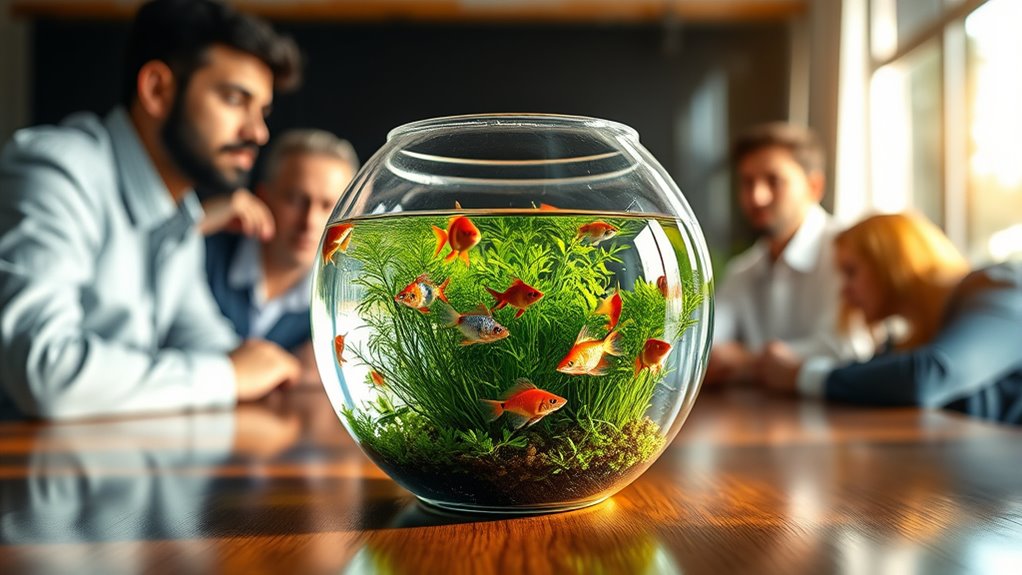

To organize effective fishbowl discussions, set up an inner circle for active participants and an outer circle for observers. Encourage respectful listening, thoughtful responses, and build shared responsibility among team members. Use clear guidelines, facilitate fairly, and guarantee quieter voices are heard. Structure helps promote open dialogue, resolve conflicts respectfully, and strengthen group cohesion. If you’d like to discover how to master this approach, keep exploring the tips that can make your discussions more productive.
Key Takeaways
- Arrange an inner circle for active participants and an outer circle for observers to promote inclusive dialogue.
- Establish clear ground rules for respectful listening, constructive feedback, and taking turns to speak.
- Encourage participants to prepare in advance to reduce hesitation and foster confident contributions.
- Use structured prompts or topics to keep discussions focused and prevent off-topic diversions.
- Facilitate actively by balancing participation, inviting quieter members, and intervening when necessary to maintain productivity.

Have you ever wondered how to encourage meaningful participation in a group discussion? Fishbowl discussions are an effective way to do just that. They create a dynamic environment where everyone feels involved, and ideas flow freely. The key to success lies in structuring the discussion properly and fostering an atmosphere of open communication. When you set up a fishbowl, you’re giving participants the chance to practice team collaboration, listen actively, and engage authentically. This format also naturally promotes conflict resolution, as differing viewpoints are brought into the conversation in a controlled, respectful manner.
Fishbowl discussions foster open communication, team collaboration, and respectful conflict resolution in group settings.
In a typical fishbowl setup, you’ll have a small inner circle of chairs—these are your discussion leaders or active participants—surrounded by a larger outer circle of observers. You invite a few people to start the conversation in the inner circle, while the rest listen attentively. As the discussion progresses, others can tap into the inner circle to share their perspectives or ask questions, either by physically replacing someone in the inner circle or through designated prompts. This structure ensures that everyone has an opportunity to contribute and that the discussion remains focused and inclusive.
One of the main benefits of a fishbowl discussion is how it encourages team collaboration. Because participants are encouraged to listen carefully and respond thoughtfully, it builds a sense of shared responsibility for the conversation’s success. When everyone feels their voice matters, it strengthens group cohesion and trust. To maximize this effect, set ground rules that promote respectful listening and constructive feedback. Encourage participants to build on each other’s ideas rather than dismissing differing opinions outright. This approach helps prevent misunderstandings and conflicts from escalating, making conflict resolution more manageable when disagreements do arise. Additionally, understanding the importance of Mazda Tuning concepts like performance upgrades can inspire participants to think creatively and share innovative ideas during discussions.
Another tip is to prepare your participants beforehand. Give them clear guidelines on how the fishbowl will work, what topics will be discussed, and how they can contribute. This preparation reduces hesitation and guarantees smoother transitions between speakers. Throughout the discussion, your role is to facilitate rather than dominate. Keep an eye on the flow, make sure quieter members get a chance to speak, and intervene if the conversation veers off-topic or becomes unproductive. This balance fosters an environment where diverse perspectives can be shared openly, and conflicts can be addressed constructively.
Frequently Asked Questions
How Do I Choose Participants for a Fishbowl Discussion?
You should carefully select participants for a fishbowl discussion by considering diversity considerations to guarantee varied perspectives. Focus on choosing individuals with relevant insights, but also include different backgrounds, experiences, and viewpoints. This approach fosters richer conversations and avoids groupthink. Aim for a balanced mix, inviting those who can contribute meaningfully while encouraging inclusivity. Your goal is to create an engaging, dynamic discussion that benefits from diverse participant selection.
What Are Common Challenges in Managing Fishbowl Discussions?
Did you know that 60% of facilitators find maintaining participant engagement challenging? Managing fishbowl discussions can be tough because keeping everyone involved and ensuring the topic stays relevant are common hurdles. You might struggle to invite quiet participants to speak or prevent the discussion from veering off-topic. Staying attentive to engagement levels and steering conversations back on track are key to successfully managing these dynamic discussions.
Can Fishbowl Discussions Be Adapted for Virtual Environments?
Yes, you can adapt fishbowl discussions for virtual environments by leveraging digital tools. You enable virtual participation through video conferencing platforms, allowing participants to join and listen actively. To boost online engagement, use features like breakout rooms, chat functions, and polls. These methods help mimic in-person interaction, making the discussion dynamic and inclusive, ensuring everyone stays involved regardless of their physical location.
How Do I Handle Dominant or Disruptive Participants?
To handle dominant or disruptive participants, you need to balance participation by gently redirecting the conversation and setting clear ground rules upfront. Manage disruptions calmly by acknowledging their input briefly, then guiding the discussion back to others. If necessary, politely remind them of the importance of equal participation. Consistently uphold these boundaries helps maintain a respectful environment and ensures everyone has a chance to contribute meaningfully.
What Topics Are Best Suited for Fishbowl Formats?
You should choose topics like ethical dilemmas or cultural differences for fishbowl discussions, as they encourage deep, diverse conversations. These subjects invite multiple perspectives and challenge participants to think critically. By focusing on sensitive or complex issues, you create an engaging environment where everyone feels encouraged to share their insights. This format works best when the goal is to explore varied viewpoints and foster understanding across different backgrounds.
Conclusion
Imagine yourself in the center of the circle, voices weaving like a gentle stream around you. With clear structure and open listening, your fishbowl discussion flows smoothly, like water gliding over stones. Embrace each turn, each word, as a ripple spreading understanding. When you stay engaged and follow these tips, your conversation becomes a vibrant dance—fluid, meaningful, and memorable—leaving everyone refreshed and inspired, just like a calm pond after a gentle rain.