When your audio is delayed, it creates a mismatch between what you say and what viewers see or hear, making you appear less prepared. This misalignment can disrupt the natural flow of conversation, making you seem unprofessional or unsure. People subconsciously judge your credibility based on seamless communication, so delays can undermine their trust. If you’re curious about how to fix these issues and maintain a confident image, there’s more to uncover.

Get business pricing on office and shipping supplies
- Business-only prices and quantity discounts
- Tax-exempt purchasing
- Multiple users, one account, clear invoices
Key Takeaways
- Audio delays disrupt lip synchronization, making speakers appear unpolished or unprofessional.
- Out-of-sync audio hampers connecting speech with facial expressions, reducing perceived confidence.
- Technical issues causing delays can be mistaken for a lack of preparation or competence.
- Poorly synchronized audio detracts from the natural flow, suggesting disorganization.
- Viewers subconsciously associate smooth communication with speaker readiness and expertise.
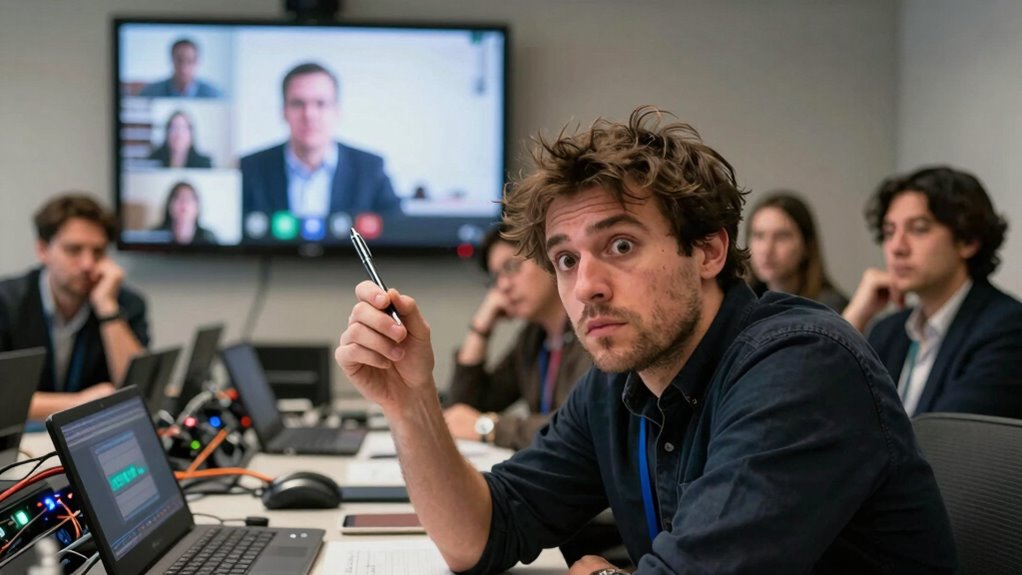
Have you ever noticed how audio delays can make synchronized sound and visuals feel off? It’s a common issue, especially when watching videos or participating in video calls. When audio lags behind what you see on the screen, it disrupts the natural flow of conversation or performance. When audio lags behind what you see on the screen, it disrupts the natural flow of conversation or performance. This misalignment, often called lip synchronization problems, can make it seem like a speaker is less prepared or less confident. Your brain relies heavily on the alignment of visual cues and sound to interpret communication, so when they’re out of sync, it creates a subconscious impression of disorganization or uncertainty.
This perception isn’t just about aesthetics; it taps into how we process and evaluate communication. When lips don’t match the speech, your mind struggles to connect the sounds with the speaker’s expressions, making their words seem less credible or less rehearsed. Even minor delays can have a significant impact, leading viewers to question the speaker’s professionalism or preparedness. The impression that someone is less prepared isn’t necessarily a reflection of their actual readiness but a response to the disrupted audio-visual harmony. Additionally, understanding the technical causes of audio delay can help in effectively troubleshooting and resolving these issues. Recognizing how hardware issues such as outdated drivers or faulty cables contribute to lag can guide more targeted solutions. Sometimes, the software settings can also significantly influence the extent of delay, so fine-tuning these can make a noticeable difference. Knowing about potential network problems can also help in preventing or reducing delays during live streams or remote meetings. Being aware of these causes allows for more effective troubleshooting and ensures smoother communication.
Understanding the root causes of audio delay involves some technical troubleshooting. Sometimes, the problem stems from hardware issues—like outdated audio drivers, poor-quality microphones, or faulty cables. Other times, the delay is caused by software settings, especially in video conferencing platforms, where audio processing or echo cancellation features might introduce latency. Adjusting buffer sizes, updating drivers, or switching to more reliable equipment can often mitigate these issues. Many times, simply resetting or reconfiguring your setup resolves the problem, restoring proper lip synchronization and improving the overall perception of preparedness.
In more complex cases, network issues can also cause delays, especially during live streams or remote interviews. High bandwidth usage or unstable internet connections lead to buffering and lag, widening the gap between audio and video. Technical troubleshooting in these scenarios might involve optimizing your network, switching to wired connections, or lowering streaming quality to reduce latency. Basically, the smoother your audio and video sync, the more confident and prepared you appear to your audience. When audio delay is minimized, it’s easier for viewers to focus on the content rather than the technical hiccups, ensuring your message comes across clearly and professionally.
audio delay fix for video conferencing
As an affiliate, we earn on qualifying purchases.
As an affiliate, we earn on qualifying purchases.
Frequently Asked Questions
How Does Audio Delay Affect Real-Time Communication Accuracy?
Audio delay impacts your real-time communication accuracy by disrupting lip synchronization, making it hard to follow conversations naturally. When there’s a noticeable delay, you might talk over others or miss cues, leading to misunderstandings. Echo cancellation can be less effective with delays, causing echoes that confuse speakers. This mismatch between audio and visual cues diminishes clarity, making interactions seem less smooth and more error-prone, affecting overall communication effectiveness.
Can Audio Delay Impact Emotional Responses During Conversations?
Like a misfired Cupid’s arrow, audio delay can disrupt emotional responses during conversations. You might experience emotional misinterpretation, where intent gets lost or misunderstood. This delay hampers genuine connection, leading to rapport disruption. When your words and expressions don’t align in real-time, it becomes harder to convey empathy or warmth. As a result, both parties may feel less engaged, making it tougher to build trust and emotional intimacy.
Does Audio Delay Influence Listener Concentration in Presentations?
Audio delay can negatively influence your concentration during presentations because it disrupts lip synchronization and breaks the flow of visual cues. When audio isn’t aligned with visuals, you find it harder to follow the speaker, leading to distraction and reduced focus. This misalignment makes it more challenging to process information effectively, causing you to lose track of key points and decreasing overall engagement with the presentation.
How Do Different Types of Audio Delays Vary in Perception?
Imagine a symphony where echoes distort the melody and feedback interference disrupts harmony. Different types of audio delays, like short or long lag times, change perception by creating varying levels of echo distortion or feedback interference. Short delays feel almost natural, while longer delays make voices seem distant or disjointed. These variations can confuse listeners, making communication less clear and affecting how people perceive your preparedness.
What Are the Long-Term Effects of Frequent Audio Delays?
Frequent audio delays can lead to long-term effects like technology fatigue and social disconnection. You might find yourself feeling increasingly frustrated and drained from constant communication glitches, which diminish your engagement and patience. Over time, this can erode your social connections and cause you to withdraw from interactions, making it harder to build trust and rapport. Staying aware of these impacts helps you prioritize smoother communication methods to maintain healthy relationships.
best microphone for synchronized audio
As an affiliate, we earn on qualifying purchases.
As an affiliate, we earn on qualifying purchases.
Conclusion
In the end, audio delay can make you seem less prepared because your audience perceives your responses as disconnected or sluggish—like waiting for a dial-up connection in the age of fiber optics. When your voice doesn’t sync perfectly with your visuals or gestures, it creates a disconnect that erodes confidence. To truly impress, you need to guarantee your audio is smooth and in sync, so your message hits home as seamlessly as a well-timed telegram.
audio interface with low latency
As an affiliate, we earn on qualifying purchases.
As an affiliate, we earn on qualifying purchases.
USB audio adapter for live streaming
As an affiliate, we earn on qualifying purchases.
As an affiliate, we earn on qualifying purchases.
Fall Picks
fall essentials
As an affiliate, we earn on qualifying purchases.