📊 Full opportunity report: Assessing Amateur Athletes’ Form With Computer Vision on IdeaNavigator AI — validation score, market gap, and execution plan.

Get business pricing on office and shipping supplies
- Business-only prices and quantity discounts
- Tax-exempt purchasing
- Multiple users, one account, clear invoices
TL;DR
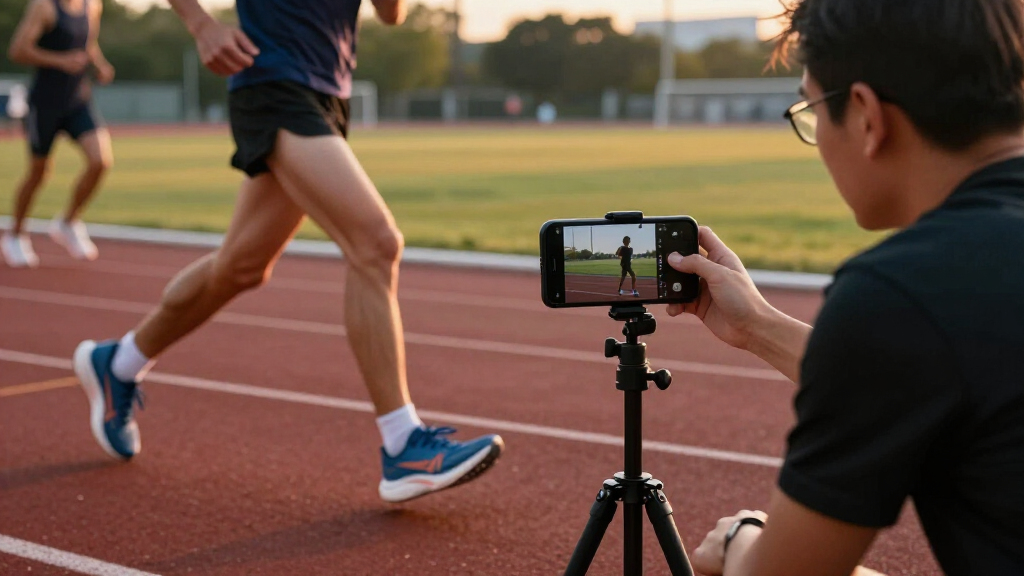
IdeaNavigator AI proposes a phone-based tool that compares young athletes’ movements with pro-derived reference mechanics and offers a drill for a key gap. The proposal is an untested product concept, not a reported launch or validated finding; it suggests a baseball-hitting pilot audited by certified coaches across 100 children.
IdeaNavigator AI has proposed a phone-based form-grading app for young athletes, starting with baseball hitting and a pilot in which certified coaches audit assessments across 100 children. The proposal describes a possible way for families without private coaching to get technique feedback, but it provides no results from a built product or completed test.
The proposed app would let a parent or athlete film a repetition, then use pose-estimation software to compare the athlete’s movement with a reference profile derived from professional mechanics. It would grade selected checkpoints—such as hip rotation, release angle and stride—and recommend one drill aimed at the largest identified gap for that session.
The initial customer is defined narrowly: a parent of a young athlete practicing without a private coach. The proposal says private sessions can cost $75 to $150, making recurring individual instruction expensive for some families. That price range is presented as part of the proposal’s problem framing; no geographic scope, survey method or market data is supplied.
The suggested business model is a family subscription for each sport, with a separate coach tier for team use. IdeaNavigator AI recommends beginning with baseball hitting rather than launching across multiple sports, then asking certified coaches to compare the app’s grades with their own assessments for 100 children. No app, subscription price, participating coaches or pilot timetable is identified.
A Lower-Cost Route to Feedback
If the concept proves reliable, phone-based feedback could give families another way to review practice when a private coach is not present. A short, targeted drill could make the feedback more actionable than a general score, while a sport-specific subscription could let a family use the tool across repeated practice sessions.
Those benefits remain possibilities, not demonstrated outcomes. The proposal does not report that the app has reduced coaching costs, improved performance or prevented injuries. Its value to athletes and families would depend on whether the system can assess movements accurately enough to guide practice—and whether users can interpret and safely apply the recommendations.
The coach audit is central to that question. Comparing software grades against coaches’ assessments could reveal where the system agrees, where it differs and which checkpoints need revision. A 100-child test could provide an initial check, but the proposal gives no details on how participants would be selected, which ages or experience levels would be included, or what level of agreement would count as success.
As an affiliate, we earn on qualifying purchases.
From Phone Video to Mechanics
The concept rests on pose estimation, a computer-vision approach that identifies body positions and movement from images or video. IdeaNavigator AI says models can now run on phones with accuracy it considers sufficient to compare a child’s mechanics with reference motion profiles. The proposal does not name a model, publish accuracy figures or cite an independent test, so that statement should be treated as the rationale for the idea rather than a verified performance result.
Its proposed workflow is deliberately limited: record a rep, compare it with a reference, grade a few checkpoints and offer one drill. That is different from a full coaching service. A professional reference may provide a comparison point, but the proposal does not explain how reference mechanics would account for differences in age, body size, skill level or coaching style.
Starting with one sport would make testing more manageable. The suggested first case, baseball hitting, would let the team focus on a defined movement and ask coaches to review the system’s outputs before expanding to other sports. The proposal does not set out the evaluation protocol or say whether the pilot would include repeated assessments over time.
pose estimation sports training app
As an affiliate, we earn on qualifying purchases.
As an affiliate, we earn on qualifying purchases.
Accuracy and Safety Still Untested
No independent accuracy results, completed pilot findings or coach-agreement measurements are provided. It is also unclear how the system would handle camera angle, lighting, clothing, movement speed and differences among children, all of which could affect what video-based analysis captures. The proposal does not say whether its reference profiles or grading thresholds have been developed.
The mention of injury risk is part of the problem statement, not evidence that the app can predict or reduce injuries. The concept supplies no clinical or sports-science evaluation of its drills, and it does not describe safeguards for situations in which a child’s movement, discomfort or injury needs a qualified professional’s attention.
Other open questions include how video would be stored, who could access it, how parental consent would work, and whether recordings of minors would be retained or shared. Pricing, availability, the intended age range and the criteria for expanding beyond baseball are also unspecified.
As an affiliate, we earn on qualifying purchases.
A Coach-Reviewed Baseball Pilot
The next step proposed by IdeaNavigator AI is a baseball-hitting pilot involving 100 children, with certified coaches checking the app’s grades against their own assessments. The concept does not state that this test has begun or identify an organizer, so it remains a suggested validation plan rather than an announced trial.
For such a test to clarify the product’s prospects, developers would need to explain how coaches score each checkpoint, how disagreements are handled and how the participants represent the intended users. Results would also need to show whether the app’s feedback is repeatable across recordings and useful to families—not just whether a model can detect movement in a video.
Until a product and pilot findings are disclosed, families should treat the proposal as an early-stage idea, not a substitute for individualized coaching or medical advice. No release date or launch plan has been announced in the available proposal.
As an affiliate, we earn on qualifying purchases.
Key Questions
Has the youth form-grading app launched?
No launch is reported. IdeaNavigator AI describes a product concept and a proposed pilot, without naming an available app or release date.
How would the proposed app assess an athlete?
The proposed workflow uses phone video and pose estimation to compare a movement with a pro-derived reference, grade selected mechanics checkpoints and suggest one drill. The system’s accuracy has not been reported.
What sport would be tested first?
The proposal recommends baseball hitting as the first use case, with certified coaches auditing assessments across 100 children. No completed test results are available.
Can the app prevent injuries?
That has not been established. The proposal cites injury risk as part of the problem it hopes to address, but provides no evidence that the app predicts or prevents injuries.
How would the service make money?
The suggested model is a family subscription for each sport, plus a coach tier for team use. No prices or subscription terms are specified.
Source: IdeaNavigator AI
Columbus Day / Indigenous Peoples' Day Picks
long weekend sales
As an affiliate, we earn on qualifying purchases.