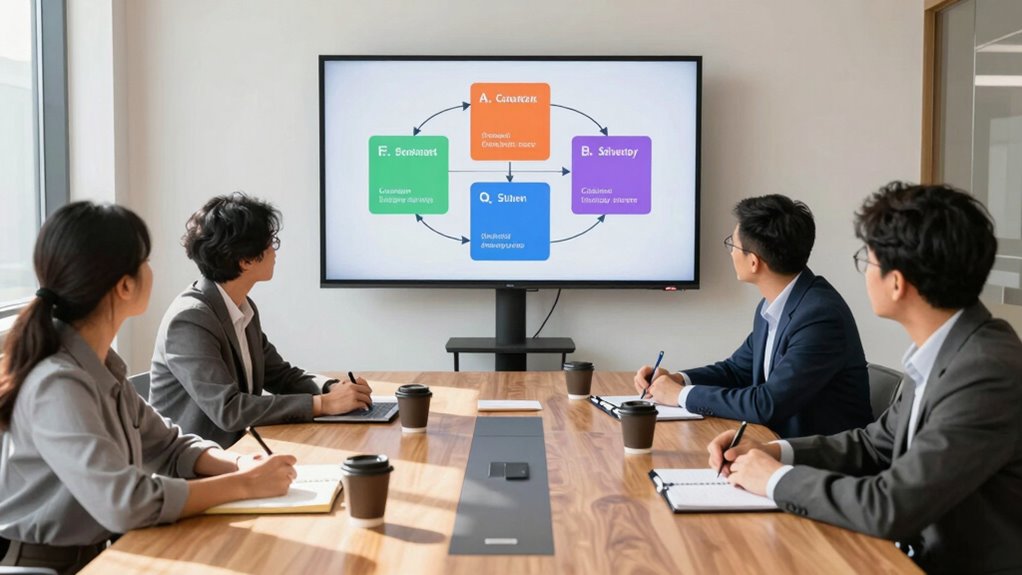

To achieve accountability without micromanaging, focus on a three-part system: set clear expectations and goals your team can own, establish regular check-ins that support progress without hover, and empower your team to make decisions and take responsibility. Trust your team members and provide necessary resources, while monitoring progress through transparent metrics. Balancing oversight with autonomy creates a motivated, engaged team—if you want to learn how to perfect this approach, keep exploring these strategies.

Get business pricing on office and shipping supplies
- Business-only prices and quantity discounts
- Tax-exempt purchasing
- Multiple users, one account, clear invoices
Key Takeaways
- Establish clear expectations and measurable goals to empower autonomy and minimize unnecessary oversight.
- Use regular, focused check-ins to monitor progress without micromanagement, emphasizing support over control.
- Implement transparent performance metrics and feedback systems to promote accountability and trust.
- Foster a culture of mutual respect, encouraging team members to own their responsibilities and decision-making.
- Leverage data analytics and AI tools for efficient progress tracking, reducing the need for constant manual supervision.
team performance metrics software
As an affiliate, we earn on qualifying purchases.
As an affiliate, we earn on qualifying purchases.
Finding the Right Balance Between Accountability and Autonomy

Finding the right balance between accountability and autonomy is essential for fostering a productive and motivated team. You can achieve this by implementing effective delegation strategies that empower your team members while setting clear expectations. When delegating, be specific about goals and deadlines, which helps build trust and clarity. Use feedback techniques to provide constructive insights without micromanaging, ensuring your team feels supported rather than scrutinized. Encourage open communication, so team members feel comfortable asking questions and sharing progress. Striking this balance means giving autonomy to foster innovation, while maintaining accountability through regular check-ins and honest feedback. Incorporating clear communication methods is vital to ensure expectations are understood and met. Additionally, leveraging modern communication tools can enhance transparency and streamline information sharing within your team. Being aware of performance metrics allows for more precise evaluation of progress and helps in identifying areas for improvement. Recognizing the importance of trust-building can further strengthen team cohesion and promote a culture of mutual respect. Building on these foundations, integrating continuous support can help sustain motivation and accountability over time. This approach keeps your team motivated, responsible, and aligned with organizational goals, ultimately creating a healthy, high-performing work environment.
project management tools for accountability
As an affiliate, we earn on qualifying purchases.
As an affiliate, we earn on qualifying purchases.
The Three Key Elements of an Accountability System

An effective accountability system hinges on three core elements that work together to guarantee goals are met and responsibilities are clear. First, performance metrics provide measurable standards to track progress and assess success objectively. Second, clear expectations define what needs to be achieved, giving your team direction and focus. Third, leadership styles influence how accountability is fostered—whether through supportive coaching or authoritative guidance—shaping team engagement and ownership. When these elements align, you create a balanced system that encourages accountability without micromanaging. You empower your team to perform at their best, knowing what’s expected, how to measure progress, and how your leadership approach supports their growth. Additionally, integrating energy-efficient cloud solutions can enhance operational transparency and sustainability, reinforcing accountability efforts. This synergy ensures goals are reached while maintaining autonomy and motivation. Moreover, understanding performance metrics and how they relate to individual and team success helps maintain motivation and clarity across your operations. Recognizing the importance of cryptid mysteries and other folklore elements can also foster a culture of curiosity and open-mindedness within your team, promoting innovative thinking and engagement. Incorporating innovative tools that leverage data analytics can further refine how accountability is monitored and improved.
As an affiliate, we earn on qualifying purchases.
How to Set Clear Expectations and Goals Your Team Can Own

To set clear expectations and goals your team can truly own, start by communicating specific, measurable, and achievable objectives. Define performance metrics that track progress and clarify success. Use delegation strategies to assign responsibilities that align with each team member’s strengths, empowering them to take ownership. Make sure goals are realistic yet challenging, encouraging accountability without overwhelming. Clearly outline what needs to be accomplished, why it matters, and the deadlines involved. When expectations are transparent, your team understands exactly what’s expected and can focus their efforts accordingly. Regularly revisit these goals to ensure they remain relevant and motivate your team to meet or exceed them. This approach fosters ownership and drives high performance, all without micromanaging.
digital check-in and feedback tools
As an affiliate, we earn on qualifying purchases.
As an affiliate, we earn on qualifying purchases.
How to Check In Regularly Without Micromanaging

To check in regularly without micromanaging, start by establishing clear expectations so everyone knows what’s needed. Then, schedule consistent check-ins to stay informed without hovering. This approach keeps communication open and productive while respecting your team’s autonomy.
Establish Clear Expectations
Establishing clear expectations is essential for checking in effectively without crossing into micromanagement. When you set precise goals, you create a shared understanding of performance metrics and desired outcomes. Use feedback techniques like regular updates and open dialogue to keep expectations aligned. To clarify roles, consider this table:
| Expectations | Success Indicators |
|---|---|
| Complete project milestones | On-time delivery |
| Maintain quality standards | Customer satisfaction scores |
| Respond promptly to queries | Positive feedback from clients |
This visual helps both of you stay focused and accountable. Clear expectations reduce ambiguity, allowing you to monitor progress without constant oversight. When everyone understands the goals, check-ins become opportunities for support and adjustment, not micromanagement. Effective communication also plays a crucial role in maintaining trust and ensuring everyone feels heard and valued. Additionally, implementing performance metrics provides objective data to guide your check-ins and foster continuous improvement.
Schedule Regular Check-Ins
Scheduling regular check-ins is key to maintaining accountability without micromanaging. These meetings keep your team motivated by providing consistent support and guidance. Use communication strategies that encourage openness, allowing team members to share updates and challenges freely. Keep check-ins focused and efficient, avoiding unnecessary micromanagement. Instead of micromanaging, ask targeted questions to understand progress and obstacles, reinforcing trust and autonomy. Consistent check-ins create a rhythm that helps everyone stay aligned with goals while feeling empowered. By balancing structure with flexibility, you foster a positive environment where team motivation thrives, and communication remains clear. Remember, the goal is to support, not control, so tailor your check-ins to promote accountability without crossing into micromanagement territory.
Empowering Your Team to Take Responsibility and Make Decisions

Empowering your team to take responsibility starts with trusting them to make decisions. Your approach to delegation strategies and leadership styles plays a vital role here. To foster autonomy, consider these steps:
Trust your team, define clear boundaries, and support their independence to cultivate responsible leadership.
- Clearly define expectations and boundaries, so your team understands decision limits.
- Match leadership styles to individual strengths, encouraging confidence and ownership.
- Provide resources and support, allowing team members to act independently while knowing help is available.
- Regularly assess and adapt your leadership approach to ensure ongoing team development and engagement, incorporating insights from leadership styles and their impact on motivation. Additionally, understanding how sound healing science can influence mental clarity may support leaders in creating a more focused environment. Recognizing the importance of effective communication can further enhance team accountability and reduce the need for micromanaging.
Monitoring Progress and Supporting Your Team While Building Trust

Building trust while monitoring progress requires a balanced approach that keeps your team motivated and accountable. Use clear performance metrics to track progress without micromanaging. Regular check-ins should focus on support and problem-solving, not scrutinizing every detail. Share performance data transparently to foster trust and understanding. Recognizing achievements to boost morale and reinforce positive behaviors is essential. When team members see that you trust their judgment and are committed to their development, trust building naturally follows. Be available to provide guidance and resources when needed, but avoid overstepping boundaries. This approach encourages accountability while maintaining the autonomy your team needs to thrive, creating a culture of mutual respect and continuous improvement. Incorporating woodworking techniques and best practices can also enhance your team’s skills and confidence. Additionally, applying performance measurement strategies rooted in transparency and fairness can significantly improve overall team dynamics. Regularly updating your performance metrics ensures that goals remain relevant and motivating for all team members. Furthermore, leveraging AI-driven solutions for monitoring progress can streamline data collection and analysis, making your oversight more efficient and less intrusive.
Frequently Asked Questions
How Can I Handle Underperformance Without Damaging Team Morale?
To handle underperformance without damaging team morale, focus on clear performance metrics and constructive feedback techniques. Address issues privately, emphasizing growth and support rather than blame. Offer specific examples, listen actively, and collaborate on improvement plans. Recognize progress to motivate. This approach keeps morale high while encouraging accountability, ensuring your team feels valued and understood rather than criticized or micromanaged.
What Are Common Mistakes to Avoid in Accountability Systems?
Think of accountability as a delicate bridge; avoid trust issues by providing consistent feedback that builds reliability. Don’t let your system become a maze of mixed messages, which can cause confusion and erode confidence. Steer clear of inconsistent feedback, as it creates doubt and hampers growth. Instead, reinforce clarity and fairness, ensuring your team feels secure, supported, and motivated to meet expectations without feeling micromanaged.
How Do I Tailor Accountability Approaches for Different Team Members?
You tailor accountability approaches by creating personalized strategies that match each team member’s strengths and motivations. Observe what drives them—some thrive on recognition, others on clear goals. Use diverse motivation techniques, like setting individual milestones or offering varied rewards. Regularly check in and adjust your approach based on their progress and feedback. This personalized, flexible method boosts engagement and accountability without micromanaging, fostering a supportive team environment.
What Tools Best Support Effective Accountability Without Micromanaging?
Imagine a compass guiding your team—tools like performance metrics and clear communication strategies serve as your navigational instruments. Use project management software like Asana or Trello to track progress visually, providing accountability without hovering. Regular check-ins and dashboards help you stay informed, fostering trust. These tools act as your compass, aligning team efforts with goals while respecting autonomy, ensuring accountability thrives without micromanagement.
How Can Accountability Improve Overall Team Culture and Engagement?
Accountability boosts your team’s culture and engagement by fostering trust building and clear communication strategies. When you hold team members accountable respectfully, they feel valued and motivated. Open dialogues encourage transparency, making everyone aware of expectations and progress. As a result, trust deepens, collaboration improves, and engagement rises. Your leadership becomes more effective, creating a positive environment where accountability naturally enhances team cohesion and overall morale.
Conclusion
By implementing this 3-part system, you’ll find that 78% of employees feel more empowered and accountable. Striking the right balance between guidance and independence fosters trust and productivity. Remember, setting clear expectations, checking in without micromanaging, and supporting your team’s growth are key. When you create a supportive environment, accountability naturally follows, enabling your team to thrive without feeling overwhelmed or overly controlled.
Halloween Picks
halloween
As an affiliate, we earn on qualifying purchases.