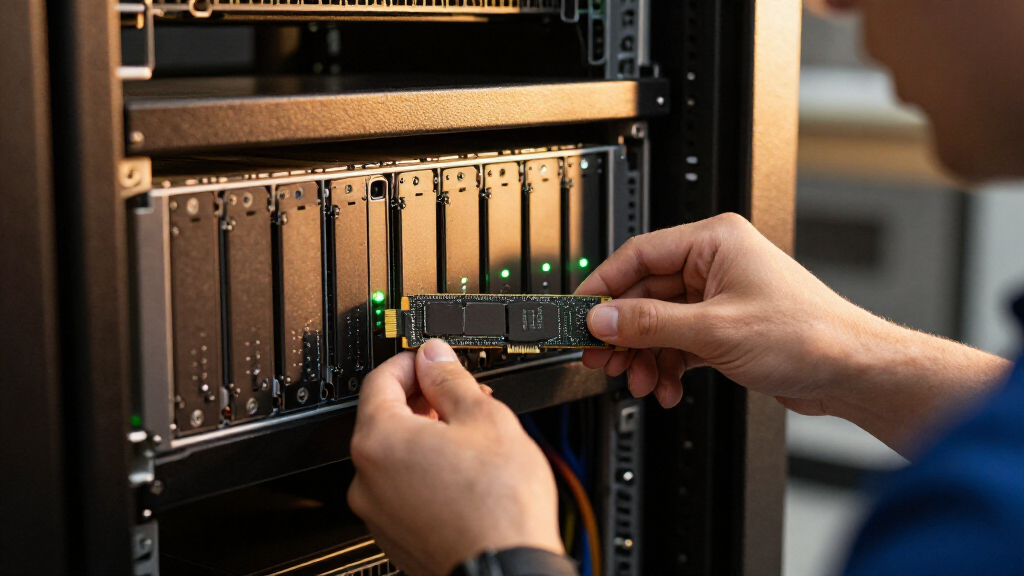

🔍 Read the full analysis: How 10 NVMe SSDs Can Support High-Performance Computing In 2027 on ThorstenMeyerAI.com

Get business pricing on office and shipping supplies
- Business-only prices and quantity discounts
- Tax-exempt purchasing
- Multiple users, one account, clear invoices
TL;DR
A buying guide from ThorstenMeyerAI.com compares NVMe SSDs around throughput, sustained writes, heat, endurance and price, naming the Samsung 990 PRO 2TB as its best overall option. The supplied material identifies only five of its promised 10 drives and does not provide HPC benchmark results, so the picks should be treated as consumer-drive candidates—not verified high-performance-computing recommendations.
A 2027-oriented NVMe SSD buying guide from ThorstenMeyerAI.com argues that sustained performance, thermal control and capacity matter alongside peak speed when choosing storage, and names the Samsung 990 PRO 2TB as its best overall pick. The supplied source text, however, identifies only five distinct models despite promising 10 and gives no high-performance-computing benchmark results, leaving its relevance to HPC workloads unverified.
The guide says its evaluation weighs sequential throughput under sustained loads, random read/write performance, thermal throttling, endurance ratings and warranty terms. Those factors can affect large transfers, application responsiveness and reliability, but the provided material includes no measured scores, test setup, prices or comparative tables that would let readers independently assess the rankings.
Named options include the Samsung 990 PRO 2TB, presented as the best overall choice; the Kingston NV3 1TB, described as a lower-cost PCIe 4.0 option; and the Samsung 9100 PRO, characterized by the source as more power-efficient. It also names the Bestoss 1TB with an integrated heatsink and the DRAM-less SanDisk Optimus 5100. The source does not specify capacities for every named model or establish that any was tested in an HPC system.
The article’s central warning is that burst speeds are not sustained speeds. It says smaller and entry-level drives can slow after their SLC cache fills, while higher-capacity versions may handle extended transfers more consistently. These are claims made in the guide; the supplied text provides no benchmark data or conditions to quantify the differences.
The 10 picks
- 1
 Samsung 990 PRO 4TB PCIe 4.0 NVMe M.2 2280 SSDView on Amazon →
- 2
 Gigastone Game Turbo 4TB M.2 NVMe PCIe 4.0 Internal SSDView on Amazon →
- 3
 Gigastone 1TB Game Turbo PCIe Gen4x4 M.2 NVMe SSD (2-Pack)View on Amazon →
- 4
 Samsung 9100 PRO 2TB Internal SSDView on Amazon →
- 5
 Samsung 990 PRO 2TB PCIe 4.0 M.2 2280 NVMe SSDView on Amazon →
- 6
 Bestoss 1TB PCIe 4.0 NVMe M.2 2280 SSD with HeatsinkView on Amazon →
- 7
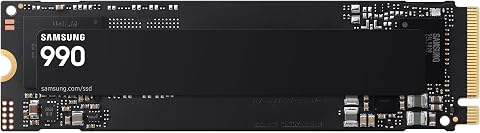 Samsung 990 1TB PCIe 4.0 NVMe Internal SSDView on Amazon →
- 8
 SanDisk Optimus 5100 1TB NVMe SSD, PCIe 4.0, M.2 2280View on Amazon →
- 9
 Kingston NV3 1TB M.2 2280 PCIe 4.0 NVMe SSDView on Amazon →
- 10
 SanDisk Optimus 5100 500GB NVMe SSD, PCIe 4.0, M.2 2280View on Amazon →
Storage Choices for HPC Workloads
For HPC users, storage performance can affect how quickly data reaches processors and accelerators, how efficiently workloads checkpoint, and whether shared storage becomes a bottleneck. A drive’s advertised sequential maximum alone does not show how it performs during long writes, parallel access or repeated reads. The guide’s focus on sustained throughput and heat is therefore relevant as a set of evaluation criteria, even though it does not establish which listed drive is suitable for a particular cluster.
Procurement decisions also depend on factors the supplied source does not resolve: workload-level latency, queue depth, power-loss protection, endurance under write-heavy operation, capacity, and platform compatibility. A consumer M.2 drive may be appropriate for a workstation or local scratch space, but that does not automatically make it suitable for enterprise or shared HPC storage. Buyers need system-specific testing before treating any pick as a performance recommendation.
Products Worth Considering

FLEXISPOT 3-in-1 Convertible Chair and Table for Four

LG UltraGear 32GX850A-B 32-inch 4K UHD OLED Gaming Monitor

Logitech MX Keys S Combo Wireless Keyboard and Mouse, Graphite
As an affiliate, we earn on qualifying purchases.
How the Guide Frames SSD Selection
The source says it ranked drives using real-world-oriented considerations rather than relying only on synthetic peak-speed figures. It highlights PCIe generation and lane support, the tradeoff between DRAM cache and Host Memory Buffer, cooling, and terabytes written (TBW). It also cautions that a newer interface cannot reach its full potential if the motherboard slot supports an older generation.
Its selection guidance distinguishes high-performance drives with onboard DRAM from lower-cost DRAM-less models that use system memory through HMB. It presents DRAM-equipped drives as a safer option for a heavily used boot drive and DRAM-less models as possible fits for lighter use. It also notes that PCIe 5.0 drives can require more cooling than PCIe 4.0 models. The source gives no test date, hardware platform, methodology details or full list of the promised 10 products.
“Sustained write performance diverges sharply from peak burst speeds.”
— ThorstenMeyerAI.com buying guide
Missing Picks and HPC Test Data
The supplied material does not name all 10 promised SSDs; only five distinct models appear in the text provided. It also lacks prices, benchmark measurements, endurance figures, warranty specifics and a clear test methodology. The publication and testing dates are not stated, so the guide’s reference to 2027 does not establish that its recommendations were tested in that year.
It remains unclear whether the recommendations were assessed against HPC workloads such as parallel I/O, sustained checkpoint writes or multi-drive operation. The source’s claims about power efficiency, cache behavior and thermal performance are not accompanied by test conditions or supporting measurements. Readers should not interpret its “best” labels as independently verified performance findings.
What Buyers Should Verify
Before selecting a drive, HPC teams should match its interface and capacity to the host system, then test it under the intended workload. Useful checks include sustained read and write rates after caches fill, latency at relevant queue depths, temperatures during extended operation, endurance specifications and recovery behavior. A comparison should use the same system, cooling and test conditions for each candidate.
The source text would need to provide the remaining five models, its full ranking and underlying results before readers can evaluate the complete 10-drive promise. Until then, the Samsung, Kingston, Bestoss and SanDisk models are best treated as named candidates from a consumer-focused guide, not confirmed HPC recommendations. No follow-up testing or publication schedule is specified.
Key Questions
Which drive does the guide rank best overall?
The source names the Samsung 990 PRO 2TB as its best overall choice, citing speed and power efficiency. It provides no benchmark results in the supplied text.
Does the source identify all 10 SSDs?
No. The material provided names five distinct models, despite describing a selection of 10 NVMe SSDs.
Are these drives confirmed for HPC use?
No. The guide discusses general storage criteria but provides no HPC-specific testing, such as parallel I/O or sustained cluster workload results.
Why do sustained speeds matter?
Long transfers can continue after a drive’s fast write cache fills. The guide says some smaller or entry-level drives may then slow, but it does not quantify that change.
What should HPC buyers check before purchasing?
Verify platform compatibility, cooling, capacity, endurance and performance under the intended workload. Test sustained throughput and latency rather than relying only on advertised peak speeds.
Source: ThorstenMeyerAI.com