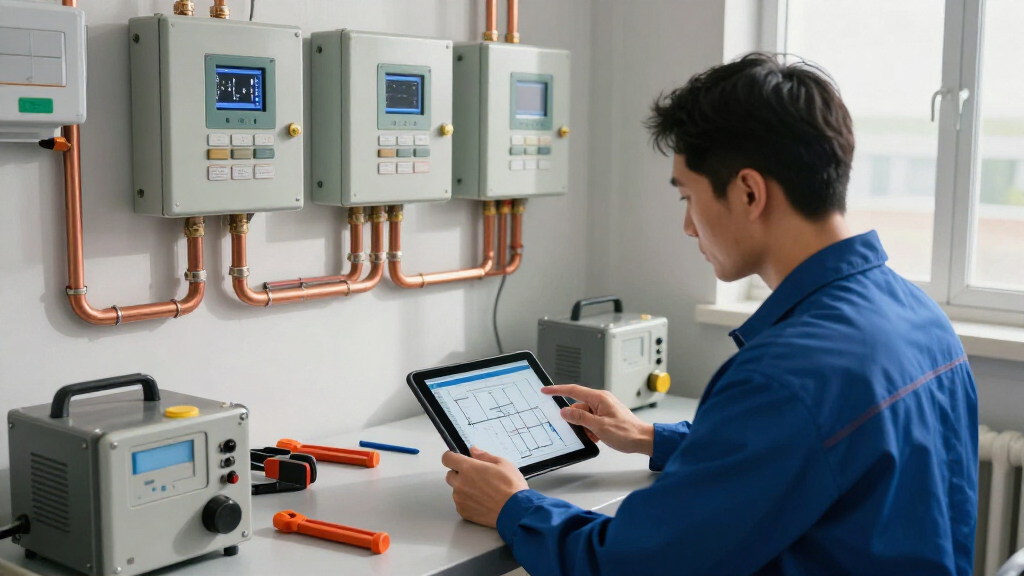

🔍 Read the full analysis: The Surprises-Ender: AI's Role In Plumbing & HVAC Coordination on ThorstenMeyerAI.com

Get business pricing on office and shipping supplies
- Business-only prices and quantity discounts
- Tax-exempt purchasing
- Multiple users, one account, clear invoices
TL;DR
A new AI-powered platform is revolutionizing plumbing and HVAC coordination by minimizing unplanned wall slots, accelerating leak detection, and streamlining project handovers. Confirmed case studies show significant efficiency gains, marking a major shift in construction workflows.
AI-driven coordination platforms are now being adopted in construction projects to dramatically improve the planning and execution of plumbing and HVAC work. Confirmed case studies show that these systems reduce uncoordinated breakthroughs, accelerate leak detection, and enhance project handovers, marking a significant shift in building services management.
Gewerkton, a voice-first platform developed for construction documentation and defect management, has demonstrated tangible benefits in real-world projects. For more details, see the original analysis. In a recent case involving a residential and nursing home outfitting company, the platform helped reduce uncoordinated breakthroughs from over 40 per project to fewer than five, according to Thorsten Meyer, an industry observer.
By integrating AI into the planning and execution phases, the platform ensures that breakthroughs are only made when properly approved and aligned with the overall design. This aligns with the insights discussed in the strategic shift in AI’s role in SaaS. This prevents costly errors such as cutting through rebar or damaging existing structures. The system also tracks the status of each breakthrough element—requested, approved, cut, or completed—enabling better oversight and coordination.
In addition, the platform’s photo grid feature ensures that every cavity wall is documented before closure, allowing leak location to be performed in approximately 20 minutes instead of two days of destructive exploration. This is part of the broader transformation highlighted in AI’s role in shaping the superpower showdown. This has led to faster repairs and reduced disruption in existing buildings. The structured equipment data also facilitates maintenance planning, warranty management, and follow-up revenue, streamlining post-handover operations.
Impact of AI on Construction Workflow Efficiency
The adoption of AI platforms like Gewerkton signifies a major advancement in construction workflow management. Confirmed case studies highlight how these systems reduce rework, prevent structural damage, and cut project timelines. This not only improves profit margins but also enhances safety and reduces material waste. As the technology matures, widespread implementation could reshape industry standards, making coordinated, data-driven construction the norm.
Products Worth Considering

Apple MacBook Neo 13-inch Laptop with A18 Pro Chip, 8GB Memory, 256GB SSD, Liquid Retina Display, and 1080p Camera – Blush

Apple iPad 11-inch with A16 Chip, 512GB, Wi-Fi 6, and Apple Pencil (USB-C) — Blue

Brother INKvestment 5010 Wireless Color Inkjet All-in-One Printer with Automatic Duplex Printing, Copying, and Scanning
As an affiliate, we earn on qualifying purchases.
Background of Coordination Challenges in Building Services
Traditionally, plumbing and HVAC trades have relied on manual planning, paper plans, and on-site adjustments, often leading to uncoordinated breakthroughs, delays, and costly errors. The problem worsened with increasing building complexity and tighter schedules. Previous efforts to improve coordination included digital plans and manual inspections, but these lacked real-time integration and often still resulted in errors.
The development of AI-powered platforms like Gewerkton aims to address these issues by providing real-time, integrated oversight of all trades, ensuring that breakthroughs are only executed when fully coordinated and documented. This approach aligns with industry efforts to digitalize construction and improve project delivery times.
“The platform’s ability to track the status of each element ensures better oversight, preventing costly errors like cutting through rebar or damaging structural elements.”
— Thorsten Meyer
Unresolved Questions About AI Implementation Scope
While initial results are promising, it remains unclear how widely AI-based coordination platforms will be adopted across different regions and project types. Questions also persist about the integration with existing legacy systems, long-term reliability, and the potential for AI to fully replace manual oversight in complex scenarios. Further studies are needed to determine scalability and industry-wide impact.
Next Steps in AI-Driven Construction Coordination
Industry stakeholders are expected to expand pilot programs and integrate AI platforms into larger projects. Future developments may include more advanced predictive analytics, broader standardization, and increased automation of coordination processes. Monitoring these implementations will reveal how quickly and effectively AI can transform building services workflows on a larger scale.
Key Questions
How does AI reduce uncoordinated breakthroughs?
AI platforms track the status and approval of each planned breakthrough, ensuring they are only executed when fully coordinated, preventing errors like cutting through rebar or damaging existing structures.
What are the main benefits observed from using AI in construction?
Key benefits include fewer unplanned wall slots, faster leak detection, improved project timelines, better documentation for handover, and streamlined maintenance planning.
Are these AI systems compatible with existing construction workflows?
Initial implementations show good integration with digital plans and project management systems, but full compatibility with all legacy systems remains an ongoing challenge that developers are working to address.
Will AI fully replace human oversight in construction projects?
Current evidence suggests AI enhances human oversight but is unlikely to replace it entirely. Instead, it acts as a decision-support tool, increasing accuracy and efficiency.
Source: ThorstenMeyerAI.com