📊 Full opportunity report: How Computer Vision Enhances Gauge Reading In Industrial Settings on IdeaNavigator AI — validation score, market gap, and execution plan.

Get business pricing on office and shipping supplies
- Business-only prices and quantity discounts
- Tax-exempt purchasing
- Multiple users, one account, clear invoices
TL;DR
Industrial facilities are testing computer vision technology to automate gauge readings via phone photos, reducing errors and enabling better maintenance insights. The approach offers a cost-effective alternative to sensor installation and is being validated across multiple sites.
Industrial facilities are trialing a new computer vision system that reads analog gauges from phone photos to replace manual transcription methods. This development aims to improve data accuracy, reduce errors, and enable trend analysis without retrofitting legacy equipment with sensors. The pilot program, conducted across three facilities, is showing promising results, signaling a potential shift in maintenance workflows.
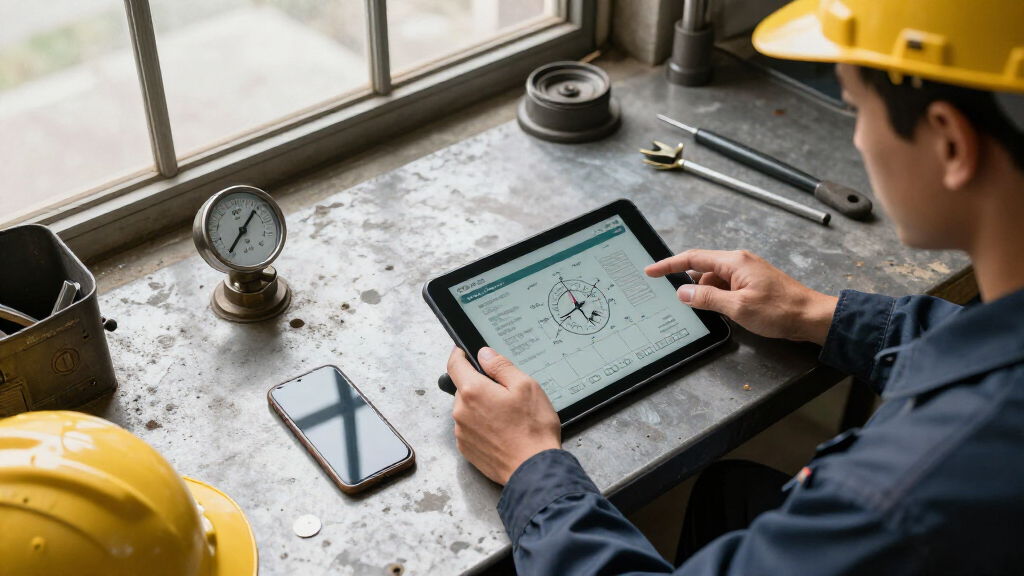
The core innovation involves technicians photographing gauges during routine rounds using smartphones. An AI-powered app then analyzes the images to extract gauge readings, compares them against expected ranges, and logs the data with timestamps and locations. This process not only automates data collection but also flags anomalies immediately, allowing for early detection of equipment issues. The approach is designed as a minimal-infrastructure upgrade, making it especially attractive for facilities with legacy systems where installing IoT sensors is prohibitively costly. The pilot program, conducted over a month at three separate sites, compares the accuracy and timeliness of phone-photo readings against traditional clipboard transcription. Early results indicate a significant reduction in transcription errors and improved anomaly detection, with some facilities observing early signs of equipment failure that might have gone unnoticed with manual methods.Experts involved in the testing emphasize that modern vision models reliably interpret analog dials, sight glasses, and counters from common phone images, making this a practical solution without requiring hardware retrofits. The system logs data automatically into existing maintenance management software, creating a digital trend history that was previously difficult to establish with manual transcription. The pilot includes a tiered subscription model, charging facilities based on the number of gauges monitored, which could make the technology scalable across different plant sizes.
Transforming Maintenance Data Collection with AI
This development could significantly improve maintenance accuracy and efficiency in industrial settings. By automating gauge readings, facilities can reduce human errors, catch developing failures earlier, and build comprehensive trend histories without costly sensor installations. This approach democratizes data collection for legacy equipment, potentially lowering operational costs and enhancing predictive maintenance capabilities. If widely adopted, it could lead to a shift away from manual, paper-based workflows toward more digital, real-time monitoring, improving safety and operational reliability across the industry.industrial gauge reader smartphone app
As an affiliate, we earn on qualifying purchases.
As an affiliate, we earn on qualifying purchases.
Legacy Equipment and the Need for Cost-Effective Solutions
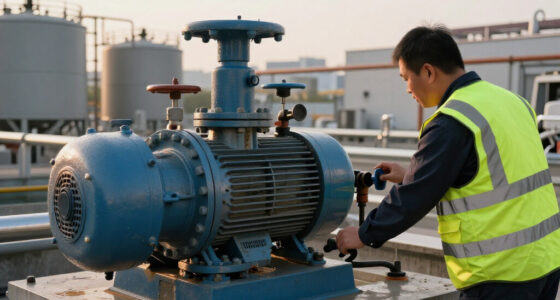
Many industrial plants rely on analog gauges and sight glasses for critical measurements, but traditional methods involve manual transcription onto paper, which is prone to errors and rarely used for trend analysis. Retrofitting these systems with IoT sensors is often too expensive or technically challenging, especially for older equipment. Recent advances in computer vision have made it possible to interpret analog displays reliably from phone photos, offering a practical alternative. Pilot programs are now testing this technology as a way to enhance data accuracy and operational insight without significant capital investment. The concept aligns with broader industry trends toward digital transformation and predictive maintenance, but its success depends on validation across diverse operational environments.AI gauge reading software for industrial equipment
As an affiliate, we earn on qualifying purchases.
As an affiliate, we earn on qualifying purchases.
Unconfirmed Long-Term Reliability and Adoption
It is not yet clear how well the system will perform over longer periods or in more complex environments. Validation is ongoing, and broader industry adoption will depend on scalability, integration with existing systems, and proven reliability across diverse operational conditions.As an affiliate, we earn on qualifying purchases.
Next Steps in Validation and Broader Deployment
The pilot program will continue for another month, focusing on comparing error rates and early failure detection. If results remain positive, plans include expanding testing to additional facilities and refining the software for broader deployment. Industry stakeholders are watching for data on long-term reliability, integration challenges, and cost savings, which will determine wider adoption.As an affiliate, we earn on qualifying purchases.
Key Questions
How accurate is the computer vision system compared to manual readings?
Early pilot results indicate that the AI system reduces transcription errors significantly and detects anomalies more promptly than manual methods, but comprehensive accuracy metrics are still being collected.
What types of gauges can the system read?
The system is designed to interpret analog dials, sight glasses, and counters commonly found in industrial settings, with ongoing testing to expand compatibility.
Will this replace manual rounds entirely?
Initially, the system is intended to augment manual rounds, providing automated data logging and anomaly detection. Full replacement depends on further validation and integration success.
What are the costs involved for facilities adopting this technology?
The model involves a tiered subscription based on gauge count, which is intended to be cost-effective compared to installing IoT sensors across legacy equipment.
How secure and reliable is the phone-photo approach?
Security depends on the app’s data handling, and reliability is currently being validated through ongoing pilot tests. Early results suggest high consistency in reading accuracy.
Source: IdeaNavigator AI
Columbus Day / Indigenous Peoples' Day Picks
long weekend sales
As an affiliate, we earn on qualifying purchases.