

🔍 Read the full analysis: Thrymvault And The Shared Desk I Set Up For AI Agents on ThorstenMeyerAI.com

Get business pricing on office and shipping supplies
- Business-only prices and quantity discounts
- Tax-exempt purchasing
- Multiple users, one account, clear invoices
TL;DR
Thorsten Meyer says his StrongMocha News Group is building Thrymvault as a shared workspace where human editors and AI agents can track newsroom work. The system is described as running on the group’s own hardware, with agent access through approved applications and changes attributed to the application involved. Some safeguards and backup plans are described as planned rather than live.
Thorsten Meyer says his StrongMocha News Group is developing Thrymvault, a shared workspace for human editors and AI agents, after finding that chat and a code-oriented task tracker made it hard to see story status, steer drafts and share completed work. The system is designed to put newsroom tasks on common boards and record changes by the approved application that made them; Meyer says it runs on the group’s own machines.
Meyer’s account of a recent workday describes nine articles being handled through a chat window and a task tracker. Agents gathered sources, drafted copy and prepared graphics, but the editor had to ask for updates, enter headline changes in chat and rely on the right agent to notice them. A finished explainer page could not be shared as a link, he wrote. He presents those problems as the reason to build a dedicated desk, rather than as results from a published performance test.
Thrymvault is described as a workspace for pages, databases and boards, built and hosted on StrongMocha’s own hardware. Agents can connect through an MCP server, a REST API or a command-line tool. Meyer says the MCP server has 20 tools, and that an agent guide is generated from the same catalogue so its instructions match the available tools.
Under the proposed newsroom workflow, a topic appears as a board card. An editor moves selected stories forward; an editorial agent then gathers source material and prepares a draft. The agent updates its status and adds a report linked to the card. Editors can request changes in the card’s discussion thread by mentioning the relevant agent application. Meyer says changes are marked with the application they came through, and that agents cannot delete material.
The shared desk · animated
How a story moves through the shared desk
One card per story. The editor moves it and asks questions in its thread; the agent does the work, keeps its status current and answers there. Every agent change is signed with its application.
Editorial board
Thread on the card
Editor@Editorial agent shorter title, no colon
AgentDone: title shortened, draft updated.
via Editorial agent
Signed history
- Moved to Kit · by the editor
- Status and draft link updated · via Editorial agent
- Comment mentions Editorial agent · by the editor
- Reply in the same thread · via Editorial agent
- Approved and scheduled · by the editor
- Published link added · via Editorial agent
Agents add and edit. They cannot delete anything.
Source: Thrymvault agent integration guide and rollout plan, November 2026. Shows the desk as designed for StrongMocha News Group; the board templates and the pick-up of mentions are still being rolled out.
Animation: Thorsten Meyer AI
The development addresses a practical coordination problem as newsrooms assign multiple tasks to automated agents: editors need to know which work is underway, what sources were used and whether requested changes were made. A board linked to each story could keep those details together instead of leaving instructions scattered across separate chat conversations.
Attribution may also help when a draft needs correction. Meyer says each agent change carries the name of its approved application, shown as “via” that application. That provides a record of which integration made a change, though it does not by itself establish that the content is accurate or that every editorial decision can be reconstructed.
For readers, the possible benefit is indirect: a more traceable production process may make it easier for an editor to review and correct work. Meyer’s account does not provide independent testing, error rates or evidence that Thrymvault has already improved published journalism. Its significance for other publishers will depend on how the system works in practice and whether its controls are reliable.
Products Worth Considering

Logitech MX Keys S Combo Wireless Keyboard and Mouse, Graphite

HP Sprocket Studio Plus Wireless 4×6 Photo Printer
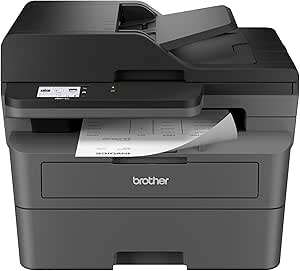
Brother MFC-L2820DW Wireless Monochrome All-in-One Laser Printer
As an affiliate, we earn on qualifying purchases.
From Chat Threads to Story Cards
Meyer says StrongMocha News Group operates a network of niche and news sites using AI agents. In his description, chat remains useful for individual conversations but poorly suited to tracking a story through sourcing, drafting, graphics, deadlines and publication. Messages can scroll out of view, and separate agents may interpret the same instruction differently.
Thrymvault’s general layout, Meyer says, may feel familiar to users of Notion, but the project is being designed around agent access and newsroom workflow. The editor is meant to make decisions, while agents carry out assigned work through approved applications. Moving a card between stages signals work to the agents; Meyer clarifies that this is an agreement in the workflow, not a software switch that automatically triggers the task.
The planned record also includes a Decisions database for changes to working rules, such as headline guidance. Meyer says the database would store the decision, its date, where it applies and a link to the underlying rule. The rule itself remains where agents can read it.
““That is the point where an AI-run newsroom outgrows chat.””
— Thorsten Meyer, describing the newsroom’s workflow
Which Controls Are Live Today
Meyer’s article distinguishes the intended workflow from features already running, but the available source material does not fully specify which parts are deployed across the newsroom. The system’s integration guide and development log are cited as of November 2026, but there is no independent assessment of the implementation or its security.
The source says an agent key acts with the rights of the person who created it, within one workspace, and cannot exceed the permissions of its application. The supplied account ends before detailing all permission rules or how access is revoked, credentials are protected, and actions are reviewed. It also does not establish how the system handles an incorrect source, an agent that fails to respond, or conflicting edits.
A second machine on standby and hourly backups are described as the next step, not as live safeguards. Meyer does not provide a rollout schedule, uptime figures, costs, or results comparing the new workflow with the earlier chat-based process.
Backup Plans and Rollout
Meyer says StrongMocha plans to add a standby machine and hourly backups; he explicitly says that setup is not live yet. The newsroom’s next steps also include rolling out the shared-board workflow, where agents report status and editors steer through card movements and comments.
The next evidence readers can look for is which features are operating in routine newsroom work, how the permission and attribution controls behave, and whether the planned backup arrangement is put in place. Until the group publishes those details or operating results, Thrymvault is best understood as a described in-house system and ongoing rollout, not a proven model for AI newsroom production.
Key Questions
What is Thrymvault?
Thrymvault is a workspace for pages, databases and boards that Thorsten Meyer says his StrongMocha News Group built and hosts on its own hardware. It is intended to coordinate editors and AI agents.
How would agents use the workspace?
Meyer says agents can connect through an MCP server, a REST API or a command-line tool. They work through approved applications and can update story cards and related reports under the described workflow.
Can an AI agent delete newsroom material?
Meyer says agents cannot delete anything. The source also says agent access is limited to approved applications, though it does not provide a complete technical audit of those controls.
Are hourly backups already running?
No. Meyer describes a second machine on standby and hourly backups as a next step, not a live feature.
Has Thrymvault been shown to improve article accuracy?
The source describes the system’s design and the problems it aims to address, but provides no independent accuracy results or measured comparison with the earlier workflow.
Source: ThorstenMeyerAI.com