
📊 Full opportunity report: Simple Gamification Ideas For Small Museum Exhibitions on IdeaNavigator AI — validation score, market gap, and execution plan.

Get business pricing on office and shipping supplies
- Business-only prices and quantity discounts
- Tax-exempt purchasing
- Multiple users, one account, clear invoices
TL;DR
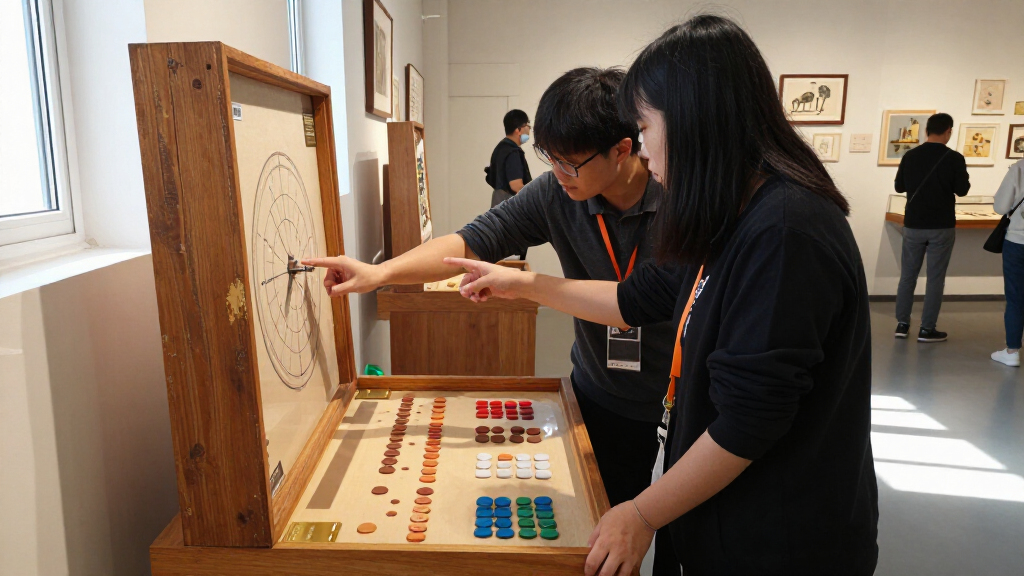
A proposal published by IdeaNavigator AI recommends testing simple, browser-based learning games with three small museums before offering them more widely. The concept is designed to fit limited staff time and grant budgets, but its effects on school bookings, family visits and repeat attendance have not been established.
IdeaNavigator AI has proposed a low-cost pilot in which three small museums test browser-based games based on their collections, aiming to give school groups and families more interactive exhibition visits without requiring an app or custom agency build. The proposal is a product concept, not a report of a completed trial: it offers no evidence yet that the games increase bookings, visitor time or repeat visits.
According to IdeaNavigator AI’s proposal, the suggested package would be tailored to museums with limited budgets and small teams, particularly a director or sole educator at a history, art or science museum that serves school groups and families. The proposal describes the intended customer as a museum with an annual budget typically below $250,000; that figure is a target profile, not a survey finding about the sector.
IdeaNavigator AI says that, under the proposed workflow, a museum would provide collection photographs, labels and object records. Within two weeks, it would receive a browser-based quest with three formats: a school-group activity adapted by grade band and aligned to state standards, a family quest, and a 10-minute individual trail. The package would also include content review by a museum educator, a basic editor for replacing objects when displays change, a printable alternative and analytics that museums could cite in grant reports.
The proposal recommends building quests for three museums at cost and tracking school-group bookings, family dwell time and repeat visits over one term against the same term a year earlier. It also suggests asking whether at least two museums would include a paid content refresh in a future grant application. These are proposed tests and thresholds, not results already achieved, according to the proposal.
Simple Gamification Ideas For Small Museum Exhibitions
IdeaNavigator AI proposes browser-based collection quests for school groups and families. The concept still needs a real-world pilot to show whether it works.
Three ways to explore
Each quest would draw on the museum’s own collection.
A guided activity
Adapted by grade band and aligned to state standards.
A shared quest
An interactive way for families to explore the exhibition.
A short trail
A proposed 10-minute independent activity.
Designed for lean teams
The proposal aims to keep setup and upkeep manageable for museums with limited staff time and budgets.
Provide photographs, labels and object records.
A museum educator reviews the quest; a basic editor and printable option support changes.
Visitors can use the activity without downloading an app.
What the pilot would track
The proposed trial compares one school term with the same term a year earlier.
Proposal versus evidence
- Build quests for three museums at cost.
- Ask whether two museums would seek funding for a paid refresh.
- No pilot results or participating museums are reported.
- Effects on bookings, learning and repeat visits remain unknown.
A Test for Lean Museum Teams
IdeaNavigator AI frames the idea as addressing a practical trade-off for small institutions: interactive activities can give visitors more structure, but creating and maintaining them takes staff time and money. The proposal says some museums rely on worksheets reused for years, while families may move through exhibitions quickly. Those statements describe the problem the concept is meant to address; the material does not provide independent research or visitor data to quantify how common the problem is.
A browser-based format could avoid asking visitors to download an app, while a staff editor and printable option could help museums keep activities usable as exhibits change. As IdeaNavigator AI’s proposal notes, if the pilot shows that activities can be updated with little staff effort and attract paid renewal interest, that could make the model more credible to institutions with constrained education budgets. Whether it produces stronger learning, longer visits or more bookings remains an open question.
The proposed fixed-price build and modest annual hosting and refresh fee are intended, according to IdeaNavigator AI, to give museums a predictable cost they could place in a grant budget. The proposal also identifies regional museum associations as possible group buyers, but does not report commitments from associations or museums.
Products Worth Considering

FlexiSpot E6 Electric Standing Desk, 55 × 28 in, Bamboo Top, White Frame

Canon SELPHY CP1500 Wireless Dye-Sublimation Photo Printer Bundle with 108 Sheets of Paper and 3 Ink Cartridges

Dell UltraSharp U4025QW 40 5K2K WUHD Curved LED Monitor (21:9)
As an affiliate, we earn on qualifying purchases.
Grant Timing and Museum Budgets
IdeaNavigator AI places the proposal against a changing U.S. funding picture. Its proposal says the Institute of Museum and Library Services announced its FY2026 Inspire Grants for Small Museums on Sept. 9, 2026, funding 88 museums to develop educational programs and exhibits. It also says an April 2026 court settlement left the agency intact, while the president’s FY2027 budget again proposed eliminating IMLS. These are separate developments: a budget proposal is not itself an enacted elimination.
IdeaNavigator AI gives Nov. 13, 2026, as a tentative deadline for FY2027 National Leadership Grants. The proposal presents a fixed-price education project as something a museum might fit into a grant request. The timing may make grant planning relevant to prospective buyers, but the proposal reports no grant award for the game concept, museum application or funding decision.
The product concept, as described by IdeaNavigator AI, is aimed at a narrow buyer rather than the museum sector as a whole: a small institution with school and family visitors and little capacity to commission or maintain digital work. That focus is why the suggested pilot emphasizes a limited number of venues and a single term of measurement before broader sales.
Pilot Results Still Unknown
No pilot results are available in IdeaNavigator AI’s proposal. It does not identify participating museums, provide a completed game, or report changes in bookings, time spent in galleries or return visits. It is also unclear how those measures would be collected consistently, how many visitors or school groups would take part, and how outside factors such as seasonal attendance or changes to exhibitions would affect comparisons with the previous year.
The proposal does not give a final price for development, hosting or refreshes, or show whether a fixed fee would fit within a particular grant’s rules and budget limits. It also does not specify which state standards would be used, how educator review would work in practice, or what visitor data the analytics would collect. The suggested two-week delivery time is a proposed service target, not a demonstrated turnaround.
Claims about reduced staff workload, improved learning and stronger repeat visitation therefore remain unverified. The proposed evaluation focuses on attendance-related indicators and renewal interest; it does not, by itself, establish educational outcomes.
Three-Museum Trial Comes First
IdeaNavigator AI’s proposal identifies the next step as making quests for three small museums at cost and running them through one school term. It calls for comparing school bookings, family dwell time and repeat visits with the same term in the prior year, then testing whether two of the three institutions would seek funding for a paid refresh.
The proposal gives no start date, participating institutions or public release schedule. Until a trial is carried out and its methods and findings are reported, the concept remains a suggested product and validation plan rather than an established solution. The proposal also does not say whether the recommended FY2027 grant deadline will remain tentative or whether any museum will use the approach in a grant application.
Source: IdeaNavigator AI
Key Questions
What is the proposed museum game?
According to IdeaNavigator AI’s proposal, it is a browser-based quest built from a museum’s own collection information, with versions for school groups, families and individual visitors. The concept does not require an app download.
Has the idea been tested in museums?
No trial results are reported in the IdeaNavigator AI proposal. It recommends creating games for three museums and measuring visitor and booking indicators over one term.
What outcomes would the pilot measure?
The proposal identifies school-group bookings, family dwell time and repeat visits as measures, compared with the same term in the previous year. It also suggests asking whether two of the three museums would seek a paid refresh in a future grant application.
How would a museum keep the activities current?
IdeaNavigator AI’s proposed package includes a simple editor for swapping objects when exhibitions change, plus a printable fallback. The proposal does not report testing of either feature.
Is the game package already funded by a grant?
No grant award for this concept is reported. IdeaNavigator AI’s proposal discusses possible grant timing and suggests a fixed-price package that a museum might include in a funding request.
Source: IdeaNavigator AI