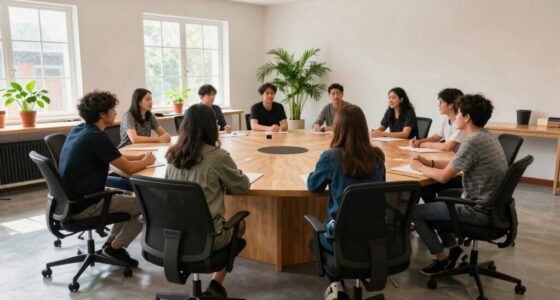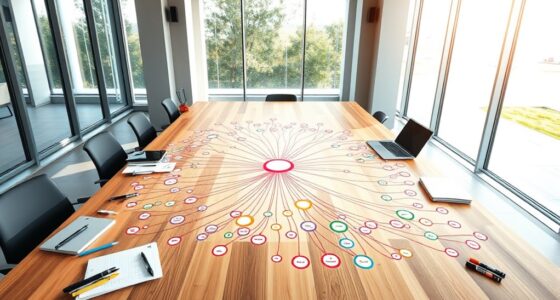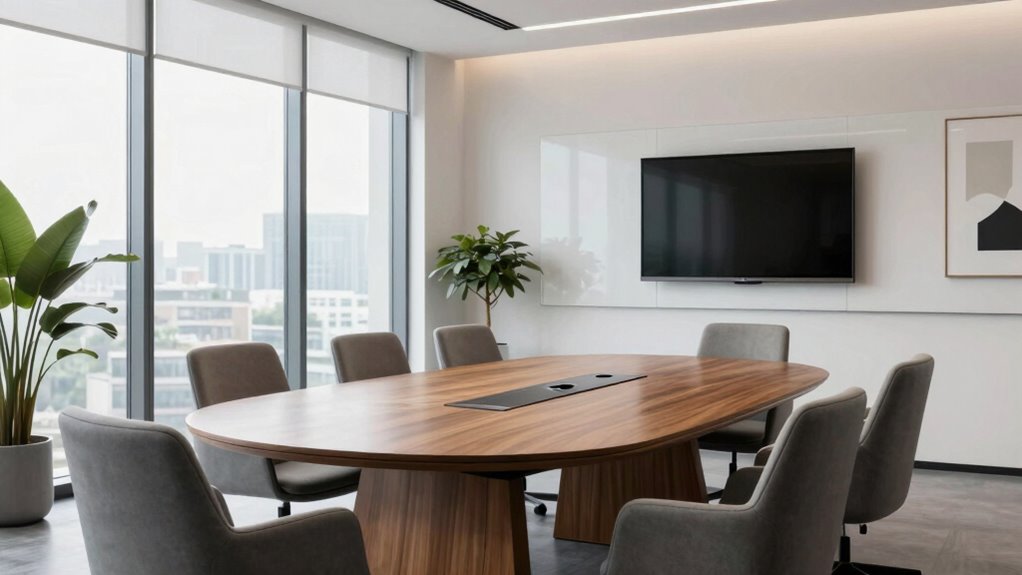
To plan a better board meeting room, focus on creating a comfortable yet functional layout. Position the main table at the center for engagement, with chairs arranged for face-to-face interaction. Enhance acoustics with soft furnishings, and maximize natural light while controlling glare. Incorporate technology like screens and sound systems for clear communication. Pay attention to accessibility and environment to foster confidence and focus. For more tips on designing an effective space, keep exploring these ideas.
Key Takeaways
- Arrange a central, comfortable table to promote face-to-face interaction and inclusivity among attendees.
- Incorporate soundproofing and soft furnishings to ensure clear audio and reduce distractions.
- Maximize natural light with adjustable artificial lighting to create a welcoming, well-lit environment.
- Integrate easy-to-access technology and visual aids for seamless communication and presentation.
- Ensure accessibility and a professional atmosphere to foster focus, confidence, and open dialogue.
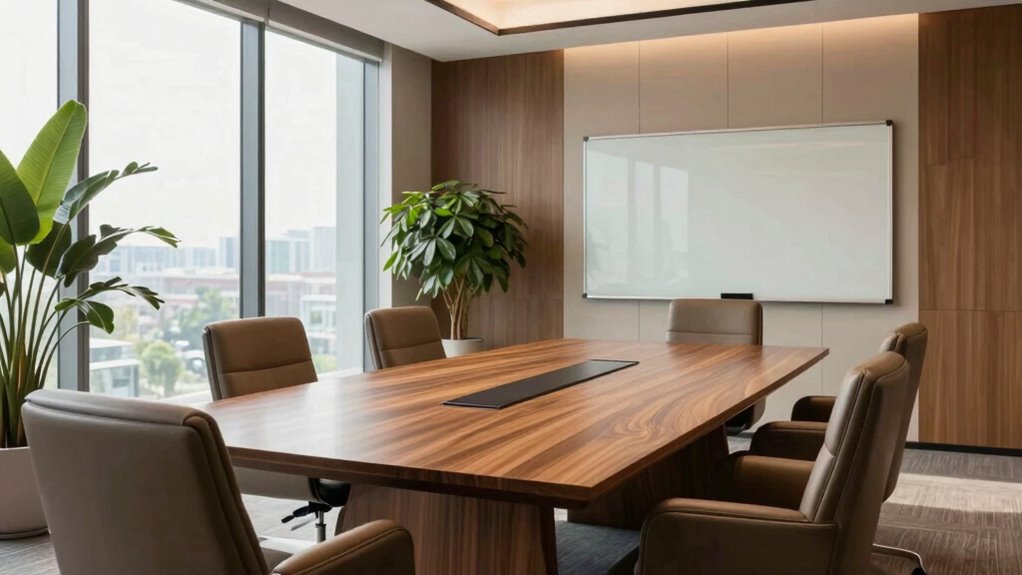
A well-designed room can considerably enhance the effectiveness of your board meetings, guaranteeing focus and collaboration. When planning the space, your first priority should be the furniture arrangement. You want to create an environment that encourages open communication while maintaining a sense of authority and professionalism. Opt for a layout that places the main table at the center, with enough space around it for movement and easy eye contact. Consider a rectangular or oval table to facilitate face-to-face interaction, making sure everyone has a clear line of sight to each other and to any presentation equipment. Avoid cluttered or overly formal arrangements that can hinder discussion; instead, aim for a balanced setup that promotes inclusivity and engagement. Chairs should be comfortable but not overly plush, as discomfort can distract attendees, and they should be arranged to allow everyone to participate equally. Incorporating acoustic considerations such as soundproofing or soft furnishings can significantly improve audio clarity during discussions. Proper room acoustics can help reduce echo and background noise, creating a more conducive environment for dialogue. To further enhance the room’s functionality, consider integrating technology that supports seamless communication and presentations. Lighting design plays an essential role in setting the tone of the room and maintaining focus. Natural lighting is ideal, so position the table near windows if possible, and use sheer curtains or blinds to control glare and ambient light levels. Supplement natural light with well-placed artificial lighting that minimizes shadows and creates an even, glare-free environment. Overhead lights should be adjustable, so you can dim or brighten based on the meeting’s needs. Consider task lighting, such as adjustable lamps at individual seats, for detailed work or note-taking. The lighting should be warm enough to foster a welcoming atmosphere but bright enough for clarity during discussions and presentations. Avoid harsh fluorescent lights that can cause fatigue or headaches, as they often detract from focus. In addition to furniture and lighting, think about other elements like acoustics and technology. Soundproofing or adding soft furnishings can reduce echo and background noise, guaranteeing everyone hears clearly. Place microphones or speakers if your room is large or if remote participants are involved. A good audio-visual setup is essential, so position screens or projectors where they’re easily visible from all seats, and ensure cables and wires are neatly organized to prevent tripping hazards. Additionally, room layout should consider accessibility features to accommodate all attendees comfortably. Incorporating visual aids such as charts or digital displays can further support effective communication and keep everyone engaged. Ultimately, the goal is to create a space that feels professional yet comfortable, where attendees can concentrate fully without distractions. When you pay attention to furniture arrangement and lighting design, you set the stage for more productive, focused, and collaborative meetings. Your room should inspire confidence and facilitate open dialogue, making every meeting a step toward better decision-making.
office conference room table
As an affiliate, we earn on qualifying purchases.
As an affiliate, we earn on qualifying purchases.
Frequently Asked Questions
What Is the Ideal Room Size for Board Meetings?
The ideal room size for board meetings is typically 20 to 30 feet, providing enough space for comfortable furniture arrangement and clear sightlines. You should include acoustic treatment to minimize noise distractions and enhance sound clarity. Make certain there’s enough room for a large table and seating, yet not so spacious that it hampers interaction. This balance creates an efficient environment where everyone feels engaged and focused during discussions.
How Can I Ensure Privacy During Meetings?
To guarantee privacy during meetings, you should implement soundproofing measures like acoustic panels or door seals to block outside noise. Additionally, use privacy curtains that you can draw when sensitive topics come up, creating a secluded environment. These steps help maintain confidentiality and prevent interruptions, making your board meetings more secure and focused. Regularly check that all privacy measures are functioning properly to keep discussions confidential.
What Technology Is Essential for a Modern Board Room?
Your modern boardroom must have cutting-edge technology, capable of transforming it into a nexus of innovation. Prioritize audiovisual integration to guarantee crystal-clear video and audio quality, making virtual collaboration seamless and effortless. Invest in smart displays, video conferencing systems, and wireless presentation tools. These essentials turn your space into a hub where ideas flow freely, fostering efficient decision-making and collaboration that’s as dynamic as the digital age itself.
How Do I Accommodate Remote Participants Effectively?
To accommodate remote participants effectively, you should prioritize seamless virtual collaboration tools and high-quality audio-visual equipment. Guarantee the room has ergonomic seating for comfort during long discussions. Position cameras and microphones strategically so remote attendees feel included and can see and hear clearly. Encourage the use of headsets for better audio quality, and facilitate easy screen sharing. This setup helps create an engaging, inclusive environment that fosters productive discussions.
What Are the Best Lighting Options for Board Rooms?
You should combine ambient lighting with task lighting to create an ideal environment. Use soft, evenly distributed ambient lighting to reduce glare and set a comfortable atmosphere. Add adjustable task lighting at each seat or around the main presentation area to guarantee everyone can see documents and screens clearly. This layered approach minimizes eye strain, enhances focus, and keeps the room well-lit for productive discussions.
soundproof room panels
As an affiliate, we earn on qualifying purchases.
As an affiliate, we earn on qualifying purchases.
Conclusion
Creating an effective boardroom boosts productivity and decision-making. Remember, a well-designed space can reduce meeting times by up to 20%, according to recent studies. Incorporate comfortable seating, good lighting, and technology that supports your agenda. With thoughtful planning, your meetings will be more engaging and efficient. So, invest in your room’s layout and ambiance—you’ll see better collaboration and results. A great space truly makes a difference in achieving your organization’s goals.
adjustable LED office lighting
As an affiliate, we earn on qualifying purchases.
As an affiliate, we earn on qualifying purchases.
conference room audio visual equipment
As an affiliate, we earn on qualifying purchases.
As an affiliate, we earn on qualifying purchases.