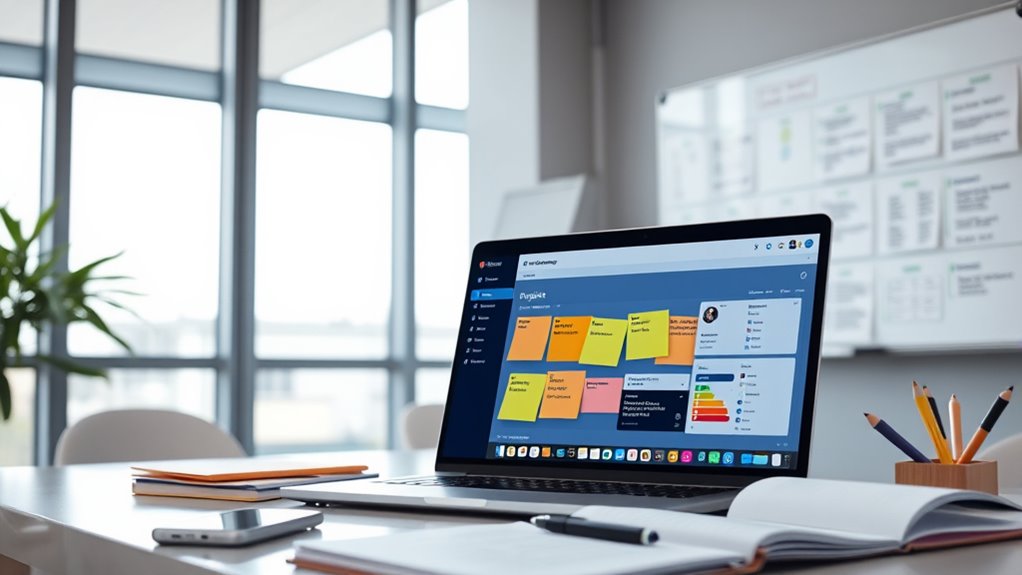

Asynchronous communication allows your team to stay connected across different time zones and schedules without needing everyone online at the same time. You can share updates, files, and feedback through tools like Slack or Trello, setting clear expectations for response times. It’s important to respect individual working hours and document everything clearly to prevent misunderstandings. Continuous collaboration becomes easier when you adopt flexible strategies and establish effective communication routines—if you want to learn how to optimize this approach, keep exploring these tips.
Key Takeaways
- Establish clear response time expectations and share individual working hours to manage delays effectively.
- Use project management tools like Trello or Asana to facilitate updates, comments, and file sharing asynchronously.
- Promote detailed, clear communication to reduce misunderstandings and ensure information is accessible at any time.
- Respect team members’ schedules and boundaries to build trust and foster a flexible, collaborative environment.
- Leverage time zone differences as an advantage for continuous workflow and round-the-clock productivity.
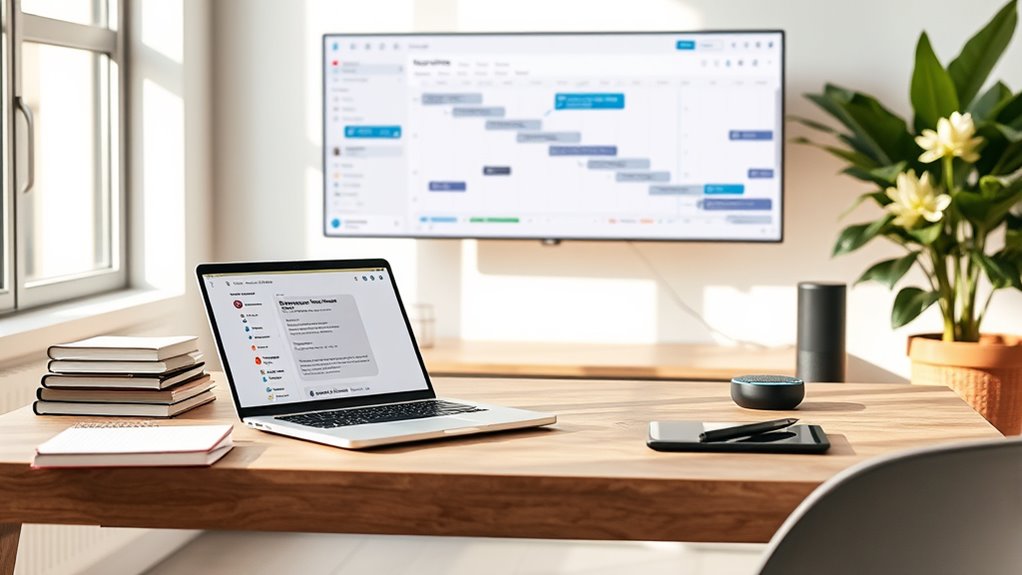
Have you ever wondered how teams stay connected without being online at the same time? It’s a common question, especially when team members are spread across different time zones. The challenge of managing time zone differences can seem intimidating at first, but with effective asynchronous communication, you can bridge those gaps smoothly. You need to understand that time zone challenges aren’t just about different clocks; they influence how quickly team members can respond and collaborate. When your team is spread across continents, it’s unrealistic to expect instant responses. Instead, setting clear response time expectations becomes essential. These expectations help everyone understand when to anticipate replies, which reduces frustration and keeps projects moving forward. For instance, establishing a standard like a 24-hour response window helps team members plan their work and avoid unnecessary delays.
To make this work, you should encourage team members to communicate their working hours and preferred response times. This way, you can prioritize messages and know when to follow up if needed. Keep in mind that respecting individual schedules fosters trust and reduces pressure, especially in cultures or roles where work-life boundaries are strong. When everyone understands response time expectations, it creates a rhythm that compensates for the asynchronous nature of communication. This doesn’t mean everyone needs to be glued to their devices constantly; instead, it emphasizes thoughtful, timely updates that respect everyone’s availability. Additionally, understanding the impact of technology can help optimize communication flow and ensure everyone stays aligned.
Encourage team members to share working hours and response preferences to build trust and improve asynchronous collaboration.
Another way to address time zone challenges is to leverage tools designed for asynchronous work. Project management apps like Slack, Trello, or Asana allow team members to leave updates, files, and comments that others can review when they’re online. This minimizes the need for real-time conversations and ensures information is always accessible. When you use these tools effectively, you create a shared knowledge base that everyone can consult, regardless of their working hours. Additionally, clear documentation and detailed messages help prevent misunderstandings, which are common in asynchronous setups. When your communication is precise and thorough, you reduce the chances of back-and-forth clarifications that can slow down progress.
Ultimately, mastering asynchronous communication means adjusting your expectations and adopting flexible strategies. Recognize that response times will vary, and that’s okay. By setting clear expectations, respecting individual schedules, and utilizing the right tools, you can turn time zone challenges into opportunities for efficient, effective teamwork. This approach ensures your team stays connected, productive, and aligned, no matter where they are in the world.
Top picks for "asynchronou communication team"
As an affiliate, we earn on qualifying purchases.
Frequently Asked Questions
How Does Asynchronous Communication Impact Team Productivity?
Asynchronous communication boosts team productivity by allowing you to work flexibly, respecting cultural considerations and individual schedules. It reduces the pressure of constant communication, giving you time to craft thoughtful responses. By managing communication frequency, you avoid burnout and ensure clarity. This approach encourages better focus and collaboration across time zones, helping you stay aligned with team goals while accommodating diverse working styles.
What Tools Are Best for Asynchronous Collaboration?
Did you know that 80% of remote workers say asynchronous tools boost productivity? For effective collaboration, you should choose tools like Slack or Microsoft Teams for quick updates, Trello or Asana for project management, and Loom for video messages. Remember to follow good communication etiquette—clear, concise messages and timely responses—so your team stays aligned and efficient without constant real-time check-ins.
How Can Teams Manage Time Zone Differences Effectively?
You can manage time zone differences effectively by prioritizing time zone coordination and setting flexible scheduling. Use shared calendars to identify overlapping work hours and plan meetings during these periods. Encourage asynchronous updates so team members can contribute on their own schedules. By respecting different time zones and promoting flexibility, you minimize delays and enhance collaboration, ensuring everyone stays aligned regardless of their location.
What Are Common Challenges in Asynchronous Communication?
You face miscommunication hurdles and information overload in asynchronous communication. While the flexibility allows team members to work at their own pace, it can also lead to misunderstandings when messages lack clarity or context. The constant flow of messages may overwhelm you, making it hard to prioritize. To manage these challenges, guarantee clear, concise communication, and set boundaries for information sharing, helping your team stay aligned and effective.
How to Ensure Clear Understanding Without Real-Time Interaction?
To guarantee clear understanding without real-time interaction, focus on clarity assurance by crafting concise, specific messages. Use straightforward language, bullet points, and visuals when possible to enhance message clarity. Always encourage questions and feedback, and summarize key points at the end of your messages. By maintaining transparency and checking for understanding, you reduce misinterpretations and foster effective communication within your team.
Conclusion
Think of asynchronous communication like planting seeds—you send your message today, and it blooms when your team checks in later. Just like a gardener trusts the process, you trust your team to respond when they’re ready. Studies show that teams using effective async methods see a 25% boost in productivity. By embracing this approach, you create a garden of ideas that grow stronger over time, fostering collaboration without the rush.