📊 Full opportunity report: What Should Business Owners Practice Before Speaking On Camera? on IdeaNavigator AI — validation score, market gap, and execution plan.

Get business pricing on office and shipping supplies
- Business-only prices and quantity discounts
- Tax-exempt purchasing
- Multiple users, one account, clear invoices
TL;DR
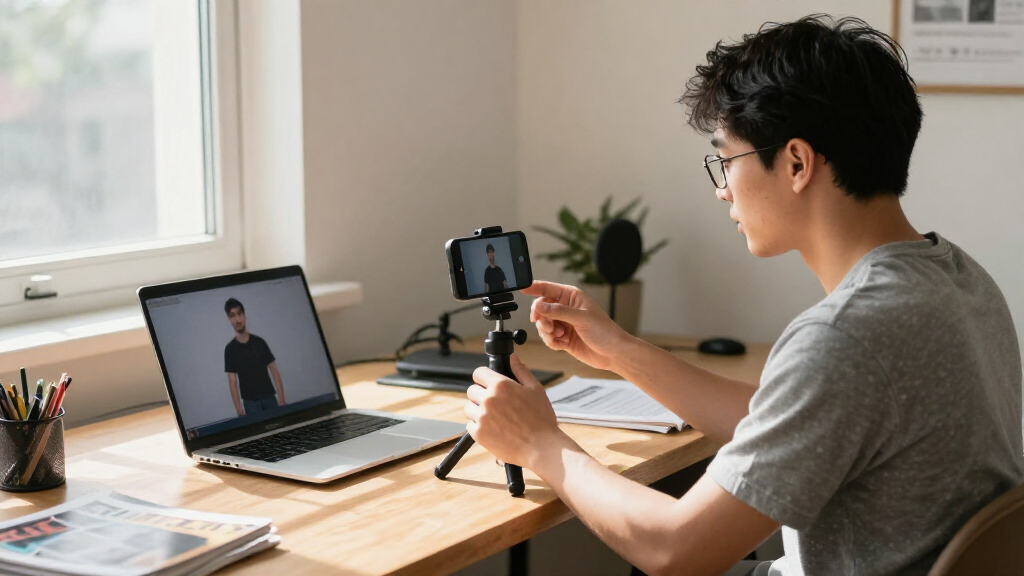
IdeaNavigator AI has outlined a proposed app to help business owners practice speaking on camera through brief daily exercises and private feedback. The concept has not been reported as a launched product or tested service; its proposed validation is a 30-day cohort study measuring video publication by day 45.
IdeaNavigator AI has outlined a proposed camera-practice app for business owners who know video could help their marketing but freeze when recording. The concept calls for short daily exercises and private feedback, but it is a product proposal—not a confirmed launch—and no user results are reported.
The proposed app would guide users through two-minute daily exercises, beginning with reading prepared text and progressing toward speaking more spontaneously. It would analyze delivery features such as pace, filler words, eye line and energy, then show users how those measures change over time. The suggested endpoint is recording and publishing real business content with greater confidence.
IdeaNavigator AI frames the problem as a gap between the pressure on owners to post video and the difficulty some face when recording alone. Stumbling, self-criticism and repeated takes can keep a business owner from publishing at all, the concept description says. It argues that public-speaking courses may not address this specific setting: speaking to a camera without an audience in the room.
The suggested business model is a consumer subscription, with a separate team tier for agencies that coach clients. These are proposed features and revenue options; the material does not identify a developer, product name, pricing, release schedule or technical implementation.
Business video · Concept brief
What Should Business Owners Practice Before Speaking on Camera?
A proposed app would use brief daily exercises and private feedback to help business owners move from camera practice to publishing real videos. It is a product concept, not a confirmed launch or tested service.
Build camera confidence, one habit at a time
The idea targets owners who see value in video marketing but freeze, self-criticize, or repeat takes when recording alone.
Start with a short script
Begin with prepared text, then gradually move toward speaking more spontaneously in brief daily sessions.
Notice delivery patterns
Proposed feedback covers pace, filler words, eye line, and energy, with progress shown over time.
Publish real business content
The intended endpoint is moving from private practice clips to videos made for customers and audiences.
A proposed path from rehearsal to release
Each step is a suggested product feature. The description does not confirm that an app or prototype exists.
Read
Use prepared prompts to get comfortable on camera.
Speak
Build toward more natural, unscripted delivery.
Review
See proposed measures and changes in delivery.
Publish
Record and share a real video for the business.
Speaking to a camera without an audience can feel different from presenting in a room. The concept focuses on that recording moment, rather than general public speaking or video editing.
How the proposed test would work
The concept suggests a waitlist comparison to examine whether practice is associated with an observable publishing behavior.
Recruit 100 business owners to complete the proposed daily practice program.
Compare the share who publish their first real video by day 45 with people on a waitlist.
The timeline illustrates the proposed schedule only. No recruitment date, study operator, trial results, or publication verification method is reported.
What is still unknown
The material describes an idea and possible revenue options. It does not report a product, user evidence, or business impact.
No confirmed launch
No developer, product name, working prototype, release schedule, or technical implementation is identified.
Assessment details absent
Recording storage, privacy protections, feedback generation, and the limits of automated assessments are unspecified.
Pricing not provided
A consumer subscription and agency team tier are proposed options. Their features and prices are not described.
No cohort findings or evidence of improved marketing, sales, or business outcomes are available. Completion rates, lasting behavior change, and differences across businesses remain unanswered.
Key questions
Has the app launched?
The available description presents a product concept. It does not confirm a launch, working prototype, or release date.
Who is it for?
Business owners who understand why video may matter to their business but struggle to record themselves.
What would people practice?
Short exercises that progress from prepared text to spontaneous speaking, with proposed feedback on pace, filler words, eye line, and energy.
How would the idea be tested?
A proposed 30-day cohort of 100 owners, compared with a waitlist on first-video publication by day 45. No results are reported.
What would it cost?
No price is given. A consumer subscription and a team tier for agencies are possible models, not confirmed plans.
What should owners practice first?
Start with brief prepared-text recordings, then build toward natural delivery and publishing a real business video.
Source: IdeaNavigator AI · Concept and proposed validation plan
Testing a Path From Practice to Posting
The proposal focuses on a measurable behavior: whether practice helps owners publish an actual video, rather than simply feel more comfortable during an exercise. That distinction matters for a tool marketed around business communication, since repeated practice or improved delivery scores would not by themselves establish that users make videos for their customers.
Its suggested test would recruit 100 business owners for a 30-day cohort and compare how many publish their first real video by day 45 with a waitlist control group. If conducted as described, the comparison could offer an early indication of whether the program is associated with publishing. However, the proposal reports no trial, results or evidence that the app improves marketing performance, sales or business outcomes.
The product also raises practical questions for a potential user: what the app records, how video data is stored, and how automated feedback is generated. The concept emphasizes private, judgment-free practice, but privacy protections and the limits of its assessments are not specified.
Products Worth Considering

Logitech MX Mechanical Wireless Illuminated Keyboard, Tactile Quiet, Graphite

Canon PIXMA PRO-200S Wireless Professional Inkjet Photo Printer

Logitech MX Keys S Wireless Keyboard, Graphite
As an affiliate, we earn on qualifying purchases.
A Narrow Use Case for Video Coaching
The idea is aimed at one defined buyer: a business owner who recognizes the value of video but avoids recording. That narrow focus separates it from a general public-speaking course or broad video-editing tool. The proposed exercises would address delivery habits in the specific setting of recording alone, then encourage users to move from practice clips to published material.
IdeaNavigator AI presents wider access to video marketing and advances in multimodal AI as reasons to explore the idea now. Those points are the proposal’s rationale, not evidence that demand has been measured or that automated analysis can reliably assess every listed trait. The suggested features, including progress tracking and confidence streaks, remain design recommendations rather than confirmed app capabilities.
No Product or Trial Results Yet
The available description does not say whether a company or team is building the app, whether a prototype exists, or when it might become available. It also gives no subscription price, details about the team tier, or explanation of how the proposed AI would score eye line, energy and other delivery measures.
No 30-day cohort findings are provided. It is therefore unknown how many owners would complete the exercises, whether participants would publish more videos than a waitlist group, or whether any change would last beyond the test period. The proposal also does not specify how it would define a published video or account for differences in participants’ businesses and prior experience.
The Proposed Test and Its Measures
The next step set out in the concept is a 30-day trial with 100 owners, followed by a check on whether participants publish a first real video by day 45 compared with people on a waitlist. No recruitment date, study operator or planned reporting date is stated.
Any future evaluation would need to report how participants were selected, how many completed the program and how publication was verified. Until such a test or product announcement is available, the camera-practice app remains an idea with a suggested validation method, not a demonstrated service.
Source: IdeaNavigator AI
Key Questions
Has the camera-practice app launched?
The available description presents a product concept. It does not confirm a launch, working prototype or release date.
Who is the proposed app for?
It is designed around business owners who understand why video may matter to their business but struggle to record themselves.
What would users practice?
The proposal describes short daily exercises that move from reading prepared text toward speaking more spontaneously, with feedback on pace, filler words, eye line and energy.
How would the idea be tested?
IdeaNavigator AI proposes a 30-day cohort of 100 owners and a comparison with a waitlist control, measuring who publishes a first real video by day 45. No results are available.
What would it cost?
No price is given. A consumer subscription and a team tier for agencies coaching clients are proposed as possible revenue models.
Source: IdeaNavigator AI