📊 Full opportunity report: Private Investigator Reporting: A Look At AI Tools on IdeaNavigator AI — validation score, market gap, and execution plan.

Get business pricing on office and shipping supplies
- Business-only prices and quantity discounts
- Tax-exempt purchasing
- Multiple users, one account, clear invoices
TL;DR
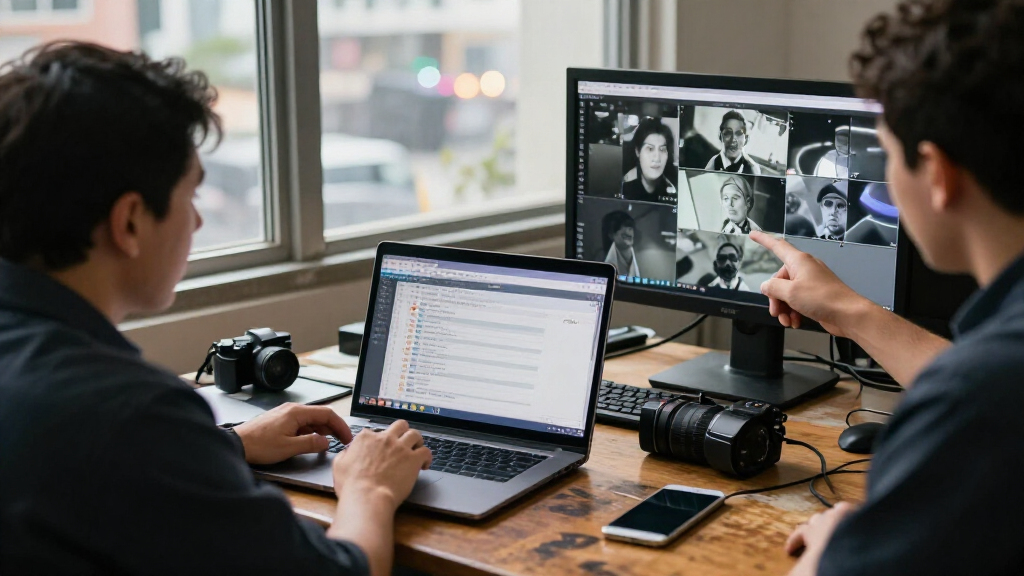
IdeaNavigator AI has outlined a proposed AI report generator for independent private investigators and small firms. The concept would turn field notes, timestamped photos and GPS tracks into draft chronological reports, but its accuracy, courtroom suitability and time savings have not been established.
IdeaNavigator AI has proposed testing an AI report generator for independent private investigators and small firms, targeting the hours spent turning surveillance notes, photographs and GPS records into formal case reports. The proposal is a product opportunity, not evidence that a tool has been built or shown to produce reports suitable for court.
The proposed software would accept field notes, timestamped photos and GPS tracks, then assemble a chronological narrative with references to exhibits. It would also flag possible gaps in the timeline and export a draft using a firm’s own report template. A human review step is part of the suggested workflow.
IdeaNavigator AI describes the intended customer as an independent investigator or small private-investigation firm. Its business model proposal is a monthly subscription charged per seat, with pricing tiers based on report volume. No prices, product release, customer commitments or working demonstration are included in the proposal.
For validation, the proposal recommends converting recent case files from 10 firms into reports, asking attorneys to review their admissibility quality and measuring the time saved per report. Those figures describe a suggested test plan; they are not results from a completed study.
Investigation technology · Proposal review
Private Investigator Reporting: A Look at AI Tools
IdeaNavigator AI has outlined a proposed report generator for independent investigators and small firms. It would turn field records into draft chronological reports, but accuracy, courtroom suitability and time savings have not been established.
01 / Proposed workflow
From field records to a reviewable draft
The concept focuses on one document workflow: assembling observations into a chronological account with references back to exhibits. Human review is part of the proposal.
Collect records
Field notes, timestamped images and GPS tracks enter the workflow.
Build chronology
AI would arrange observations and flag possible timeline gaps.
Draft the report
Generate a narrative with exhibit references and firm-template formatting.
Human review
Investigators check the draft against original records before use.
02 / Why it matters
Time savings must stand up to scrutiny
Report writing may consume time that could go to fieldwork or case review, but the proposal gives no measured baseline or savings estimate. Legal scrutiny raises the bar for any automation.
Less drafting overhead
Reliable organization could reduce the time spent turning records into a formal narrative.
Errors can matter
Wrong timestamps, omitted observations or unsupported claims could undermine a report.
Will firms pay?
Time saved and report consistency must justify a recurring subscription for small firms.
03 / What remains unknown
Reliability, privacy and legal review
No performance evidence is provided. These unresolved details shape whether the idea could be safe and useful in real casework.
Can every statement be traced?
The proposal does not explain how investigators would audit each generated claim to its source note, image or location record—or how conflicting timestamps and incomplete notes would be handled.
How would sensitive files be protected?
Storage, retention and safeguards for personal or confidential case material are unspecified. Attorney criteria and jurisdictional differences in admissibility review are also open questions.
04 / Suggested validation
A ten-firm pilot would test the idea
IdeaNavigator AI proposes using recent case files from 10 firms, having attorneys review report quality and measuring drafting time against existing workflows. No firms, schedule or results are reported.
Time saved, including time spent correcting drafts
Dates, sequence and exhibit references against source records
Attorney assessment of report quality and admissibility concerns
Whether consistency and efficiency warrant a paid subscription
05 / Key questions
What the proposal does—and does not—establish
Has an AI report generator launched?
No launch or working product details are reported. This is a proposed product and test plan.
What would the tool produce?
A chronological draft with exhibit references, timeline-gap flags and firm-template export for human review.
Has it been shown to save time?
No. Measuring time saved per report is part of the proposed pilot; no results are available.
Would generated reports be admissible?
That has not been established. Attorney review is proposed, but no legal findings or case outcomes are given.
Source: IdeaNavigator AI · Proposal, not demonstrated product evidence
Reporting Time and Courtroom Scrutiny
Surveillance work can generate records in several formats, and assembling them into a coherent account takes time. If a tool can reliably organize those materials, investigators could spend fewer hours on drafting and more time on fieldwork or case review. The proposal identifies report writing as work that may go unbilled, though it provides no measured estimate of the hours involved or the potential savings.
The stakes extend beyond speed. Reports may be scrutinized in legal proceedings, so a fluent narrative is not enough: timestamps, source records and exhibit references need to remain accurate and traceable. A generated report that introduces an error, omits a relevant observation or obscures uncertainty could create problems for the investigator and the client. Attorney review is therefore central to the suggested test, not an optional polish step.
For small firms, the commercial question is also practical: whether time saved and report consistency justify a recurring subscription. The proposal does not show that firms are willing to pay, or that the tool can fit different templates and working practices. Its value remains a hypothesis to be tested against real case files.
Products Worth Considering

HP Sprocket Panorama Portable Color Photo and Label Printer

HP Sprocket Photo Booth Instant Color Printer Bundle

Canon SELPHY CP1500 Wireless Compact Photo Printer (Black)
As an affiliate, we earn on qualifying purchases.
From Field Records to Draft Reports
The idea sits within investigation-services software and focuses on a specific document workflow rather than a general-purpose AI assistant. The proposed input materials—notes, images carrying timestamps and GPS tracks—are records investigators may use to reconstruct events chronologically. The suggested output is a draft report with linked exhibit references, timeline-gap flags and export formatting.
IdeaNavigator AI’s rationale is that language models can transform structured observations into formal narrative and that private investigators remain underserved by modern software. These are the proposal’s premises, not independently demonstrated market findings. The material gives no market-size estimate, comparison with existing products or evidence about how many investigators currently use automated reporting.
The proposed validation sequence is concrete but remains prospective: use recent files from 10 firms, obtain attorney assessments of admissibility quality, and compare drafting time. That design would address both the workflow’s efficiency and a higher-stakes question about report quality. No timeline, participating firms or evaluation criteria beyond those broad measures are specified.
Accuracy, Adoption and Legal Review
No performance evidence is provided. The proposal does not report whether a prototype exists, how accurately it preserves chronology, or how it handles conflicting timestamps, incomplete notes or unclear source material. It also does not define how the system would flag a gap without treating missing information as proof that an event did not occur.
It remains unclear what safeguards would protect sensitive case records, how files would be stored or retained, and whether investigators could audit each generated statement back to its underlying note, image or location record. Those details matter because case materials can contain personal and confidential information.
The legal review plan also leaves open how attorneys would judge admissibility quality and whether standards would vary by jurisdiction or case. No attorney findings, firm feedback, pricing tests or measured time savings are available, so the proposal does not establish that the software would be accepted or commercially viable.
A Ten-Firm Pilot Would Test the Idea
The next step described by IdeaNavigator AI is a pilot using recent case files from 10 investigation firms. Investigators or the product team would generate reports from those records, then have attorneys review the output and measure drafting time against the firms’ existing process.
For the results to answer the proposal’s central questions, the evaluation would need to distinguish time saved from time spent correcting drafts, while checking whether dates, sequence and exhibit references match the original records. The proposal does not specify such scoring rules, a comparison method or a schedule.
Until a pilot is completed and its findings are reported, the concept should be treated as an unvalidated workflow proposal. Whether a product will be developed, who would build it, what it would cost and whether investigators or attorneys would accept its reports remain unknown.
Source: IdeaNavigator AI
Key Questions
Has an AI report generator for private investigators launched?
No launch is reported. IdeaNavigator AI describes a proposed product and a way to test it, but provides no release date or working product details.
What would the proposed tool do?
It would use field notes, timestamped photos and GPS tracks to draft a chronological report, add exhibit references, flag timeline gaps and export in a firm’s template for human review.
Has the tool been shown to save investigators time?
No. Measuring time saved per report is part of the proposed pilot. No completed test results are provided.
Would AI-generated reports be admissible in court?
That has not been established. The proposal recommends attorney review of admissibility quality, but gives no legal assessment or case outcomes.
How might the product charge customers?
The suggested model is a per-seat monthly subscription with tiers based on report volume. No prices or customer demand data are reported.
Source: IdeaNavigator AI