
Readers searching for email marketing automation software should know that this roundup covers books and practical guides, not software platforms. My best overall pick is The Ultimate Guide to Email Marketing Automation for its broad focus on automated campaigns, while Marketing Automation with Mailchimp is a more direct fit for people learning a specific platform. For ecommerce workflows, the Klaviyo guide offers a narrower, sales-focused angle. The main tradeoff is breadth versus practical specialization: a general guide can help frame a strategy, but platform-specific or prompt-based books may offer more targeted starting points. Continue reading for the full breakdown and help matching a guide to your goals.

Get business pricing on office and shipping supplies
- Business-only prices and quantity discounts
- Tax-exempt purchasing
- Multiple users, one account, clear invoices
Key Takeaways
- The Ultimate Guide to Email Marketing Automation is the broadest starting point in this lineup, while platform-specific books make more sense when your tool choice is already settled.
- The Klaviyo title concentrates on ecommerce flows, so it is more relevant to online stores than to service businesses or general lead nurturing.
- Several books focus on AI prompts, including ChatGPT, Gemini, and copy-paste prompt collections; these are aids for campaign production, not substitutes for automation software.
- Marketing Automation with Mailchimp and the Fexingo title address named platforms, making them more targeted than broad email strategy guides.
- The collection is made up of learning resources rather than actual software products, so readers who need features, integrations, or deliverability tools should compare platforms separately.



| email marketing automation software | Product type | Format |
|---|---|---|
| The SaaS Email Marketing Playb | Book | — |
| Klaviyo Email Marketing Automa | Guide | — |
| Email Marketing Mastery: A Pra | Guide | — |
| The Ultimate Guide to Email Ma | Not specified | — |
| Email Marketing Automation: Ho | Book | — |
| Email Marketing Automation wit | — | Guide |
| Email Marketing Automation and | — | Guide |
| AI Email Marketing | — | Not specified |
| Gemini for Small Business Owne | — | Practical playbook |
| Marketing Automation with Mail | — | Guide |
| Marketing Automation with Fexi | Not specified | — |
| AI for Email Marketing Automat | — | Prompt workbook |
More Details on Our Top Picks
The SaaS Email Marketing Playbook: Convert Leads, Increase Customer Retention, and Close More Recurring Revenue With Email
SaaS-specific guidance is the clearest reason to choose this book: its focus spans lead conversion, customer retention, and recurring revenue rather than treating email as a series of isolated campaigns. Compared with Email Marketing Mastery, which also covers list building and follow-ups for online businesses, this title has a narrower business-model focus that may better fit subscription companies. It is a strategy resource, not automation software, and the available details do not identify a platform, workflow templates, or setup instructions. That makes it more useful for shaping what a SaaS email program should accomplish than for configuring automations directly. Choose it if retention and recurring revenue are central goals; skip it if you need tool-specific implementation steps or a ready-made flow library.
Pros:- Targets SaaS business goals, including customer retention and recurring revenue
- Connects lead conversion with ongoing customer communication
- Keeps the subject focused on email marketing for subscription businesses
Cons:- The available details do not specify software integrations or implementation steps
- No ready-made automation flows or platform-specific features are described
Best for: SaaS founders and lifecycle marketers seeking guidance on using email to convert leads, retain customers, and support recurring revenue.
Not ideal for: Marketers looking for software, platform-specific setup instructions, or ready-to-import automation workflows.
- Product type:Book
- Business focus:SaaS
- Primary channel:Email marketing
- Topics:Lead conversion, customer retention, recurring revenue
- Automation platform:Not specified
- Format details:Not specified
Our verdict“Choose this book for SaaS-focused email strategy, but choose a workflow guide if you need automations ready to configure.”
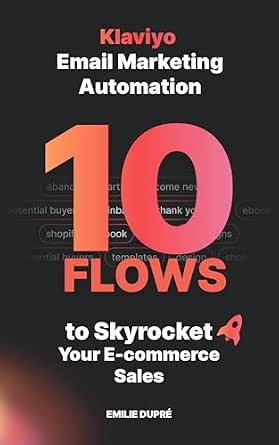
Klaviyo Email Marketing Automation – 10 Flows to Skyrocket Your E-commerce Sales
For a store already using Klaviyo, this guide offers the most direct path in this group from automation idea to customer-journey flow: it supplies ten pre-built email flows aimed at e-commerce. That focus sets it apart from The SaaS Email Marketing Playbook, which addresses retention and recurring revenue but is centered on SaaS rather than online retail. The templates can give a store team a useful starting structure for personalized messages, though the description does not name the individual flows or explain how much setup each requires. Its strongest limitation is also its defining boundary: Klaviyo-only usefulness. Stores with unusual products or customer journeys may need to adapt the templates, and businesses on other platforms will get little practical value. Pick it for focused implementation, not broad automation education.
Pros:- Provides ten ready-made automation flow templates
- Designed specifically around e-commerce customer journeys
- Focuses on personalized messaging to support sales and engagement
- Works within the Klaviyo platform
Cons:- Useful only to marketers working with Klaviyo
- The ten-flow scope may not cover every store or lifecycle need
- Niche businesses may need to customize the templates
Best for: E-commerce operators and email marketers already using Klaviyo who want a defined set of customer-journey automations to adapt.
Not ideal for: Businesses using another email platform or stores whose niche customer journeys need more than a limited template set.
- Product type:Guide
- Platform:Klaviyo
- Number of flows:10
- Business focus:E-commerce
- Primary use:Email marketing automation
- Flow approach:Pre-built templates for customer journeys
- Customization:May be needed for niche businesses
Our verdict“Choose this guide if your store uses Klaviyo and needs a focused flow starting point, not a platform-neutral automation resource.”
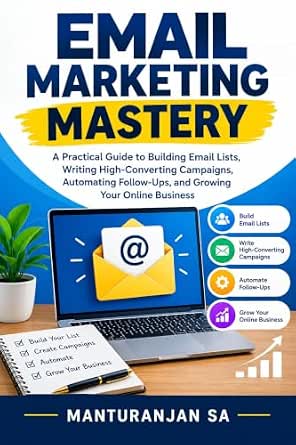
Email Marketing Mastery: A Practical Guide to Building Email Lists, Writing High-Converting Campaigns, Automating Follow-Ups, and Growing Your Online Business
This guide earns its place by linking list building, campaign writing, and automated follow-ups rather than focusing on a single flow or business model. Compared with Klaviyo Email Marketing Automation – 10 Flows to Skyrocket Your E-commerce Sales, it is broader and less tied to a particular platform, making its stated scope more relevant to online businesses outside e-commerce. That breadth also means it may offer less immediate implementation detail for a store owner who simply wants platform-specific templates. The supplied information does not identify tools, sample sequences, or technical setup steps, so I would treat it as an introductory strategy guide rather than a software replacement or detailed build manual. It makes the most sense for a business owner connecting audience growth with campaign execution; specialists seeking narrow, ready-to-use automation assets may prefer a more focused resource.
Pros:- Covers list building alongside email campaign writing
- Includes guidance on automating follow-ups
- Frames email as a channel for growing an online business
Cons:- The available details do not identify a supported automation platform
- No specific templates, flow count, or technical setup guidance is described
Best for: Online-business owners building an email list who want guidance spanning campaigns and automated follow-ups.
Not ideal for: Experienced lifecycle teams seeking named platform integrations, technical workflow instructions, or e-commerce-specific flow templates.
- Product type:Guide
- Business focus:Online businesses
- Topics:Email list building, campaign writing, automated follow-ups
- Primary channel:Email marketing
- Automation platform:Not specified
- Format details:Not specified
Our verdict“Choose this guide for a broad online-business introduction to email and follow-ups, not for platform-specific automation instructions.”
The Ultimate Guide to Email Marketing Automation
The title makes this the broadest-sounding automation resource in the group, but the supplied product information provides no description, platform details, or named topics beyond email marketing automation. That makes it harder to recommend for a particular business or implementation task than Email Marketing Automation: How Any Business Can Automate Lead Generation and Increase Sales, which at least identifies lead generation and sales as its focus. A broad title could suit someone comparing automation concepts, but buyers cannot verify from the available details whether the guide includes workflows, technical instructions, or software examples. I would rank it below the better-defined guides for buyers who need a clear fit. Choose it only if the general subject matches your research and you can confirm its contents before relying on it for a specific platform or campaign.
Pros:- Its stated subject is email marketing automation
- The broad title may appeal to readers exploring automation as a topic
- Does not appear limited to a named platform in the supplied information
Cons:- No product description is provided to verify its coverage
- No platforms, workflows, or implementation details are specified
- Its fit is less clear than guides with stated goals such as lead generation or SaaS retention
Best for: Readers seeking a general introduction to email marketing automation who can check the guide’s contents before purchase.
Not ideal for: Marketers who need confirmed platform compatibility, detailed workflow templates, or a clearly stated business use case.
- Product type:Not specified
- Stated subject:Email marketing automation
- Business focus:Not specified
- Automation platform:Not specified
- Workflow details:Not specified
- Format details:Not specified
Our verdict“Consider this only for general automation research if you can verify the contents, since the available information does not establish its practical scope.”
Email Marketing Automation: How Any Business Can Automate Lead Generation and Increase Sales
This book’s clearest differentiator is its focus on automating lead generation and supporting sales, which gives prospective buyers a more defined objective than the general title of The Ultimate Guide to Email Marketing Automation. It may suit businesses that want to connect email sequences with prospect acquisition, while The SaaS Email Marketing Playbook is a closer match for teams prioritizing retention and recurring revenue. The tradeoff is limited detail: the available description does not name a platform, explain how to build the automations, or specify which business types the advice addresses. That leaves its practical depth uncertain, especially for marketers seeking implementation-ready workflows. I would shortlist it for its lead-generation emphasis, but not treat the description as proof of software compatibility or a complete technical playbook.
Pros:- Directly addresses automating lead generation
- Connects email automation with sales growth
- Presents its intended use as relevant to businesses broadly
Cons:- No automation platform or integration details are provided
- The available description gives no specific workflow or implementation examples
- The product information offers little detail for judging its depth
Best for: Small-business owners and marketing generalists seeking an email strategy centered on lead generation and sales growth.
Not ideal for: Automation specialists who need confirmed software integrations, detailed workflow templates, or SaaS retention guidance.
- Product type:Book
- Business focus:Any business, as stated in the title
- Primary goal:Automate lead generation
- Related goal:Increase sales
- Primary channel:Email marketing
- Automation platform:Not specified
Our verdict“Choose this for a lead-generation-first email strategy, but seek a more detailed resource if you need platform-specific setup guidance.”
Email Marketing Automation with ChatGPT: Build Repeatable Campaign Systems for Consistent Audience Engagement
This guide is a fit for marketers who want to use ChatGPT as part of a repeatable email workflow, rather than rely on one-off prompts. Its focus on campaign systems and steady audience engagement gives it a clearer automation angle than AI Email Marketing, whose supplied listing has no details about its approach. It may help readers structure recurring work, but the available product information does not specify platform instructions, examples, or technical automation setup. That makes it a planning and content-process resource, not a substitute for email software that triggers and sends campaigns. Compared with Marketing Automation with Mailchimp, it is less tied to a named platform, but also offers less confirmed guidance on implementing automations inside a specific service.
Pros:- Focuses on repeatable campaign systems rather than isolated email drafts
- Covers ChatGPT applications for email marketing
- Connects automation planning with consistent audience engagement
Cons:- The available description does not identify supported email platforms or implementation steps
- No details are provided about sample workflows, templates, or campaign examples
- ChatGPT-assisted content planning does not itself automate sending or subscriber management
Best for: Email marketers who already use ChatGPT and want a repeatable framework for planning campaign content and maintaining audience communication.
Not ideal for: Teams seeking step-by-step setup for a particular email platform, integrations, or automated sending workflows; those details are not provided.
- Format:Guide
- Subject:Email marketing automation
- AI tool covered:ChatGPT
- Primary focus:Repeatable campaign systems
- Engagement focus:Consistent audience engagement
- Email platform:Not specified
- ASIN:B0HGR9F97R
Our verdict“Choose this guide if you want a ChatGPT-centered framework for repeatable campaign planning, not platform-specific automation instructions.”
Email Marketing Automation and CRM Systems: A Complete Guide to Funnels, Segmentation, and Customer Lifetime Value
This guide takes a broader strategy view than Email Marketing Automation with ChatGPT: its stated subjects link email workflows with CRM systems, funnels, segmentation, and customer lifetime value. That combination suits readers who need to think about how contacts move from lead to repeat customer, not just how to produce campaign copy. The focus on segmentation also gives buyers a useful lens for matching messages to different audiences. The tradeoff is that the product details do not identify a platform, setup instructions, or specific automation examples, so I would treat it as strategic reading rather than an implementation manual. Compared with Marketing Automation with Mailchimp, it appears less vendor-specific and more centered on lifecycle concepts, but offers no confirmed Mailchimp guidance.
Pros:- Pairs email automation with CRM systems
- Covers funnels and audience segmentation
- Includes customer lifetime value as a lifecycle planning focus
- Offers a broader strategic scope than a single-platform guide
Cons:- No specific software platforms or integrations are identified
- The available description does not confirm hands-on setup examples
- The broad scope may be less useful to readers seeking immediate campaign templates
Best for: Marketing managers and small-business owners planning connected email, CRM, and funnel strategies across the customer lifecycle.
Not ideal for: Readers who need detailed instructions for building workflows in a named email service or CRM, since no platform-specific coverage is listed.
- Format:Guide
- Primary subject:Email marketing automation and CRM systems
- Funnel coverage:Funnels
- Audience strategy:Segmentation
- Lifecycle metric:Customer lifetime value
- Email platform:Not specified
Our verdict“Pick this guide for a cross-channel lifecycle and CRM perspective, and choose a platform-specific resource when implementation steps are the priority.”
AI Email Marketing
AI Email Marketing has a relevant, concise title for readers exploring how artificial intelligence might support email campaigns, but the supplied listing provides no description, feature details, or stated method. That makes it a much less informed choice than Email Marketing Automation with ChatGPT, which at least identifies ChatGPT and repeatable campaign systems as its focus. I can’t confirm whether this book covers automation workflows, AI-generated copy, specific tools, or implementation examples, so its role here is limited to readers willing to investigate further before buying. The central tradeoff is uncertainty: the subject may fit an AI-curious marketer, but the listing does not give enough evidence to judge practical depth or platform relevance.
Pros:- Title directly signals an AI and email marketing focus
- Could suit readers seeking an introductory topic-specific resource
- Leaves room for a different approach from the explicitly ChatGPT-focused guide
Cons:- No product description or coverage details are provided
- No specific AI tools, email platforms, or automation methods are confirmed
- Practical examples and implementation depth cannot be evaluated from the available information
Best for: AI-curious email marketers who are comfortable checking the book’s contents or sample material before deciding whether its approach fits their needs.
Not ideal for: Business owners who need a clearly scoped guide to a named AI assistant, repeatable workflows, or platform setup; none is confirmed in the supplied details.
- Format:Not specified
- Stated subject:AI email marketing
- Description:Not provided
- AI tools covered:Not specified
- Email platforms covered:Not specified
- Automation methods:Not specified
- ASIN:B0DJPM6WRJ
Our verdict“Consider this only if you can review more details first; the ChatGPT campaign-systems guide is the clearer choice for a defined AI workflow.”
Gemini for Small Business Owners: The Practical Playbook – 160 Copy‑Paste Prompts for Email, Sales, Marketing & Customer Service
This playbook is the most immediately usable prompt resource in this group: it lists 160 copy-and-paste prompts spanning email, sales, marketing, and customer service. For a small-business owner facing writer’s block, that breadth can speed up routine message drafting without requiring a blank-page start. Its scope is wider than Email Marketing Automation with ChatGPT, which is specifically framed around repeatable email campaign systems; Gemini’s prompts may help produce messages, but the supplied description does not establish automated sequences, triggers, or subscriber segmentation. That distinction matters if the goal is software-driven automation rather than faster content creation. The prompts may also need substantial editing to reflect a particular industry, brand voice, or customer situation.
Pros:- Provides 160 ready-to-use prompts
- Covers email alongside sales, marketing, and customer service
- Copy-and-paste format can reduce time spent starting routine messages
- Aims at owners with limited marketing experience
Cons:- Prompts may need customization for industry details and brand voice
- The listed scope does not confirm email-platform automation instructions
- Its multi-function focus gives email campaigns less exclusive attention than a dedicated automation guide
Best for: Small-business owners who use Gemini and want prompt starters for everyday email, sales, marketing, and customer-service writing.
Not ideal for: Email teams seeking a technical automation manual with platform workflows, segmentation rules, or industry-specific campaign sequences.
- Format:Practical playbook
- AI assistant:Gemini
- Prompt count:160
- Prompt format:Copy-and-paste
- Covered functions:Email, sales, marketing, and customer service
- Intended audience:Small-business owners
- Industry-specific customization:May be required
- ASIN:B0HLYTHGTR
Our verdict“Choose this for fast Gemini-assisted business writing across several functions, not for building email automation workflows.”
Marketing Automation with Mailchimp
Among these five titles, Marketing Automation with Mailchimp is the clearest pick for readers already committed to Mailchimp: its stated purpose is to use that platform’s automation to scale marketing strategies, with tips, techniques, and best practices. The named-platform focus makes it more directly applicable than Email Marketing Automation and CRM Systems, whose supplied description covers broader strategy but does not identify software. That specificity is also its main limit. Buyers using another email service may get less value, and the available details do not name particular Mailchimp features, workflow examples, or setup steps. I would treat it as a platform-focused strategy guide rather than assume it provides a full technical walkthrough. Its usefulness depends on whether Mailchimp is central to your current marketing stack.
Pros:- Centers on Mailchimp marketing automation
- Connects automation with scaling marketing strategies
- States a focus on practical tips, techniques, and best practices
- More platform-specific than the broader CRM and lifecycle guide
Cons:- Its relevance may be limited for businesses using a different email platform
- The supplied details do not list specific workflows or Mailchimp features
- No confirmed setup examples or coverage of integrations are provided
Best for: Small businesses and marketing teams using Mailchimp who want guidance on applying its automation to broader marketing goals.
Not ideal for: Marketers using other email platforms or buyers who need confirmed, step-by-step setup instructions for specific workflows.
- Format:Guide
- Platform:Mailchimp
- Primary subject:Marketing automation
- Stated goal:Scale business marketing strategies
- Additional focus:Improving ROI
- Coverage:Tips, techniques, and best practices
Our verdict“Choose this if Mailchimp is your email platform and you want strategy guidance; look to a broader guide if you need CRM concepts that transfer across tools.”
Marketing Automation with Fexingo: HubSpot, Marketo, and Automated Customer Journeys
This title is the most relevant pick here for readers weighing HubSpot and Marketo as part of an automation strategy. Its focus on automated customer journeys suggests a platform-oriented perspective, unlike Marketing Automation with Mailchimp, which points to one specific service. That distinction may help buyers who are still comparing systems rather than choosing a tool. The limitation is the sparse product information: there are no confirmed details about email workflows, setup guidance, integrations, or the depth of its platform comparisons. I would treat it as a possible starting point for researching automation concepts, not as a verified implementation manual. Readers who need practical email sequence instructions may get clearer direction from the email-focused titles in this roundup.
Pros:- References both HubSpot and Marketo, giving its stated scope a comparative angle.
- Focuses on automated customer journeys, a useful lens for planning follow-up across customer stages.
- Platform-oriented framing distinguishes it from the Mailchimp-specific title in the roundup.
Cons:- Available product information does not confirm the depth or accuracy of its platform guidance.
- Email-specific capabilities, such as sequence design or deliverability advice, are not stated.
- No details are provided about format, examples, or intended reader experience.
Best for: Marketers comparing HubSpot and Marketo who want a resource centered on automation platforms and customer journeys.
Not ideal for: Email marketers seeking confirmed step-by-step campaign setup, platform-specific workflow instructions, or detailed feature coverage.
- Referenced platforms:HubSpot, Marketo
- Stated subject:Marketing automation
- Named automation focus:Automated customer journeys
- Product type:Not specified
- Email workflow details:Not specified
- Platform implementation details:Not specified
Our verdict“Choose this title if your main question is which automation platform to investigate, but skip it if you need verified, hands-on email workflow instructions.”
AI for Email Marketing Automation: 150+ Copy-Paste Prompts for Emails, Sequences, and Campaigns
This workbook takes a narrower, more hands-on route than Marketing Automation with Fexingo: it offers 150+ copy-and-paste prompts for producing emails, sequences, and campaigns with AI, rather than centering on named automation platforms. That makes it a potential time-saver for marketers who already know their audience and need starting points for campaign copy. Prompts can help generate drafts, but they do not replace segmentation decisions, consent practices, workflow configuration, or editorial review. The description also does not identify a particular AI tool or provide examples of the prompts, so buyers cannot judge how specific or adaptable they are before choosing it. I see it as a drafting aid, not a complete email automation system or strategy guide.
Pros:- More than 150 prompts provide a substantial set of starting points for recurring email tasks.
- Covers emails, sequences, and campaigns rather than focusing on a single message type.
- Designed specifically for email marketers, keeping the prompt topics aligned with campaign work.
Cons:- The named AI platform and compatibility details are not provided.
- Prompts alone do not configure automations, segment subscribers, or manage campaign delivery.
- No sample prompts or further product details are available to gauge quality and specificity.
Best for: Email marketers who already manage campaigns and want reusable AI prompts to speed up drafting emails, sequences, and campaign ideas.
Not ideal for: Beginners who need instruction on choosing an email platform, building automated workflows, or setting campaign strategy rather than generating copy.
- Format:Prompt workbook
- Prompt count:150+
- Topic:AI-assisted email marketing
- Prompt style:Copy-and-paste
- Content coverage:Emails, sequences, and campaigns
- Intended audience:Email marketers
Our verdict“Pick this workbook to accelerate AI-assisted email drafting, but choose a platform guide if you need help building and managing automated campaigns.”

How We Picked
I evaluated these titles as learning resources for email automation, not as software platforms. The ranking favors clear alignment with email automation, practical relevance to building campaigns or workflows, and how well a title appears suited to a particular buyer need. I also separated broad strategic guides from platform-specific instruction and AI prompt books, since they help at different stages of the buying process.
Titles with a direct focus on automation and repeatable campaign systems rank ahead of books whose scope is mainly general marketing or AI prompts. Specificity can still make a book the better choice for a defined need: the Klaviyo and Mailchimp titles are stronger matches for readers committed to those platforms. Because the provided titles do not establish software capabilities, pricing, or hands-on outcomes, this comparison does not treat the books as software recommendations or claim verified results.
| email marketing automation software | Product type | Format |
|---|---|---|
| The SaaS Email Marketing Playb | Book | — |
| Klaviyo Email Marketing Automa | Guide | — |
| Email Marketing Mastery: A Pra | Guide | — |
| The Ultimate Guide to Email Ma | Not specified | — |
| Email Marketing Automation: Ho | Book | — |
| Email Marketing Automation wit | — | Guide |
| Email Marketing Automation and | — | Guide |
| AI Email Marketing | — | Not specified |
| Gemini for Small Business Owne | — | Practical playbook |
| Marketing Automation with Mail | — | Guide |
| Marketing Automation with Fexi | Not specified | — |
| AI for Email Marketing Automat | — | Prompt workbook |
Factors to Consider When Choosing Email Marketing Automation Software
Before choosing a resource from this list, separate the need to learn automation from the need to buy automation software. A book can help you plan sequences, clarify segmentation, or draft messages, but it cannot send campaigns or connect your business tools. These factors can help you decide which kind of help you need first.
Choose a Strategy Guide or a Platform Manual
Start by asking whether you have selected a platform. If not, a broad guide can help you map welcome, onboarding, and retention workflows without tying every lesson to one interface. If your team already uses Mailchimp or Klaviyo, a platform-specific title may reduce the gap between learning and implementation. A common mistake is buying a tool-specific guide before confirming that the tool fits your contact data, sales channels, and reporting needs. Strategy books can age more gracefully than interface instructions, while platform manuals may need replacement when menus and features change. Match the resource to your current decision, not merely to a familiar brand name.
Match the Resource to Your Business Model
Email automation for an online store often centers on browse, cart, purchase, and replenishment behavior; a service business may rely more on lead qualification, appointment reminders, and follow-up. Choose examples that resemble your customer journey, since an irrelevant workflow can be harder to adapt than a shorter, more focused guide. The Klaviyo title has a clear ecommerce orientation, while titles about lead generation, CRM, and retention suggest broader business use. Avoid assuming that a book aimed at online sales will cover consent, sales handoffs, or long decision cycles for professional services. Write down two or three workflows you need before choosing, then check whether the resource addresses those patterns.
Treat AI Prompts as Drafting Support, Not Strategy
Prompt collections can help teams generate subject lines, sequence drafts, or alternate message angles, especially when campaign production is a bottleneck. They do not determine who should receive a message, what behavior should trigger it, or whether the content reflects your brand accurately. Before relying on generated copy, plan a human review for factual claims, tone, privacy, and audience fit. A prompt book can be a useful supplement to a strategy guide, but it is a weak stand-alone choice if you have not mapped your customer journey. Buyers should also check that examples suit their AI tool and workflow rather than expecting every prompt to transfer unchanged.
Separate Learning Materials From Software Requirements
This roundup contains books and guides, not the platforms that store contacts and run automated sends. If you need an operational system, compare software on workflow triggers, segmentation, integrations, consent management, reporting, and deliverability support. A guide can help you define requirements before choosing a vendor, which may prevent buying a platform with features your team will not use. Do not treat a book title that names a platform as proof of current product coverage or access to the software itself. Confirm the publication details and contents before purchase, particularly for fast-changing interfaces and AI tools.
Plan for Implementation and Ongoing Ownership
An automation project needs more than a sequence of messages: someone must maintain data fields, review triggers, manage unsubscribes, and monitor performance. Small teams may benefit most from a straightforward guide that helps them launch a few useful workflows before expanding. Larger teams may need material on CRM coordination, segmentation rules, and customer lifetime value, alongside internal ownership and approval processes. A frequent mistake is building many journeys at once without deciding who will update them when products, policies, or customer behavior change. Choose a resource that supports the next practical step your team can own, rather than the most ambitious-sounding plan.
Frequently Asked Questions
Are these 12 items email marketing automation software platforms?
No. The list contains books, guides, and prompt collections about email marketing, automation, or related tools. They cannot manage subscribers, trigger messages, or report campaign results on their own. If you need a working platform, compare software separately and use these titles as learning material. Check the product listing carefully so you know whether you are buying a book or software access.
Which guide should I choose if I have not picked an email platform yet?
A broad automation guide is usually a more flexible starting point than a manual tied to one provider. It can help you define the workflows, audience segments, and goals you will later use to compare platforms. The Ultimate Guide to Email Marketing Automation is the clearest general-purpose match by title in this group. Once you have shortlisted tools, a platform-specific guide may help with implementation, but confirm that its instructions match the current product version.
Is the Klaviyo guide a good fit if I do not run an online store?
It may be less relevant if your work does not depend on ecommerce customer behavior. Its title focuses on Klaviyo flows and ecommerce sales, which points toward store-oriented workflows rather than a broad treatment of every business model. A lead-generation, CRM, or general automation guide may better match a service business or a team focused on longer sales cycles. Before choosing, compare the examples and contents with the customer journey you actually need to automate.
Can an AI prompt book replace an automation platform or a marketing plan?
No. Prompt books can help draft or adapt campaign copy, but they do not send messages, manage subscriber permissions, or decide when a workflow should run. They also cannot replace decisions about audience segments, offer strategy, and review standards. Treat prompts as a production aid within a larger process, with a person checking accuracy and brand fit. If your core problem is workflow design or platform setup, choose a resource focused on those tasks first.
What should I verify before buying a guide for Mailchimp, Klaviyo, or another named tool?
Check the publication date, edition, table of contents, and whether the material gives instructions for the version you use. Platform interfaces and features can change, so an older guide may explain useful concepts while showing outdated steps. Confirm that the book covers your actual tasks, such as building triggers, segmenting contacts, or connecting commerce data. Also verify that the listing is for the guide itself rather than a subscription, template pack, or software account.
Conclusion
For a best overall learning resource, I would start with The Ultimate Guide to Email Marketing Automation, since its title directly addresses the category. For best value in practical breadth, Email Marketing Mastery may suit readers who want list building, campaigns, and follow-ups in one learning path, though it is less narrowly focused on automation. The best platform-specific picks are Marketing Automation with Mailchimp for Mailchimp users and the Klaviyo guide for ecommerce teams already considering Klaviyo. For beginners, a broad guide is a safer start than an AI prompt collection; for AI-assisted campaign drafting, compare the ChatGPT, Gemini, and copy-paste prompt titles as supplements. There is no true software-platform or premium software pick in this lineup: these are educational resources, so readers who need live automation should select a platform separately.