
📊 Full opportunity report: The Delegation Ladder: The Four Agentic Loops, and What Each One Lets You Stop Doing on ThorstenMeyerAI.com — validation score, market gap, and execution plan.
TL;DR
AI engineers are adopting the ‘Delegation Ladder,’ a framework of four agentic loops that define how much work can be delegated to AI agents. Each rung allows progressively more autonomy, shaping how AI processes are designed and managed.
Anthropic’s Claude Code team has outlined a structured framework called the Delegation Ladder, which categorizes four types of agentic loops that define how much control developers delegate to AI systems. This development offers a clear map for designing AI workflows with varying levels of autonomy, signaling a shift from AI as a tool to AI as a process that can run independently.
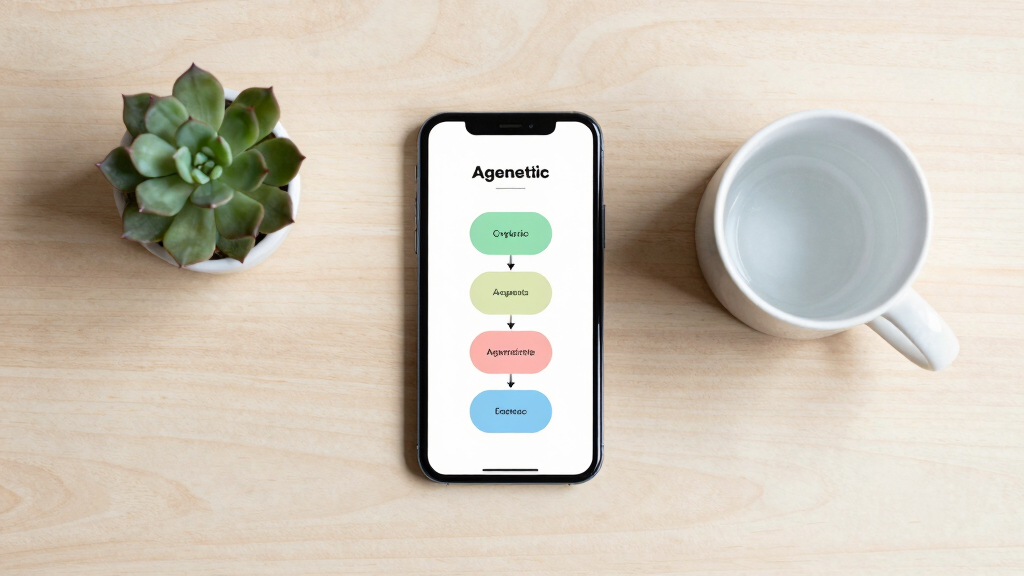
The framework identifies four distinct agentic loops, each representing a different level of delegation. The first, Turn-based, involves the AI performing a cycle of work with the developer controlling each step, primarily for short, one-off tasks. The second, Goal-based, allows the AI to iterate until a specified success criterion is met, reducing the need for human oversight during execution. The third, Time-based, automates recurring tasks triggered by scheduled intervals or external events, enabling work to continue without direct human input. The fourth, Proactive, represents fully autonomous workflows triggered by events or schedules, orchestrating multiple agents and processes independently. Anthropic emphasizes that each rung offers different leverage and control, with higher levels requiring more discipline and system safeguards.Anthropic cautions that not every task warrants automation at the highest levels and recommends starting with simpler loops, scaling only when the task justifies it. The framework aims to help developers design AI systems that are both efficient and manageable, emphasizing the importance of system integrity, verification, and documentation.
The delegation ladder: four agentic loops, and what each lets you stop doing
Strip the hype and a “loop” is simple — an agent repeating work until a stop condition is met. The useful lens isn’t the mechanics, it’s what you hand off. Four loop types = four rungs of delegation, from a tool you operate to a process that runs.
The whole framework reduces to one question about your own work: where am I the bottleneck, and which single piece can I hand off? Can you write the check? Is the goal concrete? Does the work arrive on a schedule? That answer picks your rung — and you climb one step at a time. The real skill isn’t operating a loop; it’s the judgment of what to delegate and how far — enough hands off to gain leverage, enough on the wheel that “runs without you” doesn’t become “runs away from you.”
Implications of the Delegation Ladder for AI Workflow Design
This framework clarifies how AI developers can progressively delegate tasks, reducing manual oversight and increasing automation. It highlights the importance of choosing the appropriate loop based on task complexity, cost, and risk. By defining these levels, the Delegation Ladder helps prevent over-automation, ensuring that AI systems remain controllable and aligned with organizational goals. For businesses, adopting this structured approach can lead to more efficient AI deployment, better resource management, and improved oversight of autonomous processes.
Building AI Agents for Network Operations: Design LLM-powered NetOps workflows with Python, Ollama, MCP, and tool calling
As an affiliate, we earn on qualifying purchases.
As an affiliate, we earn on qualifying purchases.
Background and Evolution of AI Loop Frameworks
The concept of loops in AI development is gaining traction as a way to formalize how automation is implemented. Previously, most AI systems operated on simple prompt-response cycles, requiring constant human input. Recently, industry leaders like Anthropic have introduced the idea of multiple loop types to delineate levels of autonomy—from basic turn-based checks to fully autonomous, event-driven workflows. This shift reflects broader trends in AI toward self-sustaining processes that reduce human intervention, especially in repetitive or predictable tasks. The framework aligns with ongoing efforts to improve AI reliability, safety, and efficiency, and is part of a larger movement to treat AI as a process rather than just a tool.“The Delegation Ladder offers a practical map for designing AI workflows with varying degrees of autonomy, helping developers balance control and leverage.”
— Thorsten Meyer, AI researcher
As an affiliate, we earn on qualifying purchases.
Unresolved Questions About Implementation and Risks
It is not yet clear how organizations will implement these loops in complex, real-world scenarios or how they will manage potential failures at higher levels of autonomy. The framework provides a conceptual map, but practical guidelines for safe deployment, error handling, and oversight at scale are still emerging. Additionally, the long-term implications of fully autonomous workflows on accountability and control remain uncertain, with ongoing debate about best practices for managing risks associated with high-level automation.As an affiliate, we earn on qualifying purchases.
Next Steps for Developers and Organizations
Organizations are expected to experiment with the four types of loops in controlled environments, gradually increasing autonomy as they gain experience. Industry groups and standards bodies may develop best practices and safety protocols for higher-level loops. Further research will likely focus on integrating verification and oversight mechanisms into autonomous workflows, as well as establishing guidelines for risk management. Monitoring how these frameworks influence AI deployment in real-world applications will be crucial for shaping future best practices.
As an affiliate, we earn on qualifying purchases.
Key Questions
What is the main purpose of the Delegation Ladder?
The Delegation Ladder provides a structured framework to help AI developers understand and implement different levels of task delegation, from simple checks to fully autonomous workflows.
How does each rung of the ladder differ?
Each rung represents a higher level of autonomy: turn-based involves human-controlled checks; goal-based allows AI to iterate until success; time-based automates recurring tasks; and proactive enables fully autonomous, event-driven workflows.
Why is it important to choose the right loop level?
Selecting the appropriate level balances efficiency with control and safety, preventing over-automation and ensuring tasks are managed within organizational risk parameters.
Are there risks associated with higher-level loops?
Yes, fully autonomous workflows can lead to unforeseen errors or loss of control if not properly managed, making safeguards and verification critical.
What should organizations do next?
Start testing lower-level loops in controlled settings, develop best practices for safety, and gradually adopt higher levels of autonomy as confidence and oversight mechanisms improve.
Source: ThorstenMeyerAI.com