
📊 Full opportunity report: The SSD Squeeze: Why Storage Joined the Party on ThorstenMeyerAI.com — validation score, market gap, and execution plan.
TL;DR
In 2026, NAND flash memory prices have surged sharply, affecting both enterprise and consumer storage. The shortage is driven by AI’s growing storage needs and competition for manufacturing capacity among memory types. Industry makers are prioritizing high-margin products, and prices are expected to stay high for the foreseeable future.
Storage prices are rising sharply in 2026, with enterprise SSD contract prices jumping over 50% in a single quarter, and consumer drives doubling or tripling in cost. This surge is driven by a combination of supply shortages and increased demand from artificial intelligence applications, affecting the entire NAND flash market.
Over the past nine months, contract prices for NAND flash have multiplied roughly four to four-and-a-half times, leading to record-high costs for SSDs and other storage devices. Major manufacturers such as Samsung, SK Hynix, and Micron have scaled back wafer production targets, citing a focus on higher-margin products and the lucrative nature of shortages. As a result, supply is tightening significantly, with Micron only able to meet about 55-60% of its main customer demand.
Simultaneously, AI workloads are consuming enormous amounts of storage, with high-end AI GPUs requiring around 16TB of flash memory and entire server racks demanding over 1,000TB. This demand shift from training to inference, along with new AI-specific storage patterns, has turned storage from a passive component into an active part of AI infrastructure, further fueling shortages and price increases.
Industry insiders note that new fabs are still years away, and the current scarcity is partly driven by deliberate capacity constraints aimed at maximizing margins. The result is a market where supply is controlled by a few firms, and prices are unlikely to fall soon, making storage a more expensive and strategic resource in 2026.
The SSD squeeze: storage joined the party
Storage was the last cheap thing in computing. Not anymore — a 2TB NVMe that was $120–150 in 2024 now lists at $300–480. And this time flash isn’t only collateral damage: AI eats storage directly.
both ways
Flash got hit twice — once as collateral sharing fabs with HBM, once directly as AI inference turned fast storage into something it consumes by the petabyte. That second force won’t fade; it grows with every model, every RAG pipeline, every cache that must live somewhere fast. Buy what you need now; favor TLC with DRAM cache, don’t overpay for Gen 5, watch for counterfeits. Relief isn’t forecast before late 2027. When the cheapest component in computing has a two-year waitlist, “commodity” no longer fits. Next: The High-End PC & Workstation Tax.
Impacts of Storage Shortages on the Market and Consumers
The sharp rise in NAND flash prices affects a broad range of users, from large enterprise data centers to individual consumers. Enterprise buyers face higher costs for critical storage infrastructure, which can impact cloud services and large-scale AI deployments. Consumers are seeing higher prices for SSDs and reduced storage capacities in new PC models, with some manufacturers downgrading base storage to cope with shortages.
Additionally, industries relying on long-term storage, such as automotive and industrial sectors, are experiencing extended lead times and backorders, complicating supply chains. The market’s current state underscores a shift where storage is no longer a cheap, passive component but a scarce and valuable resource, influencing pricing, availability, and future procurement strategies.
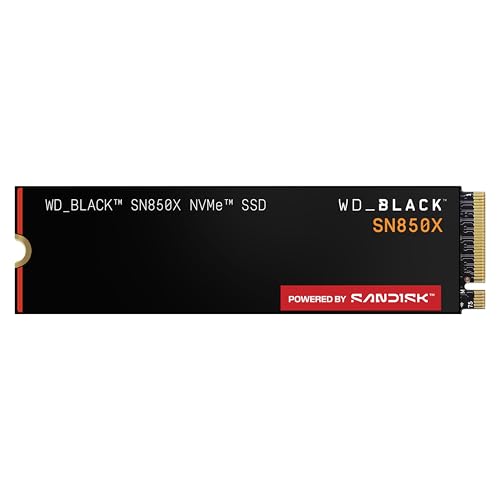
WD_BLACK SN850X 2TB NVMe SSD – M.2 2280, Up to 7,300 MB/s Read speeds, Up to 6,300 MB/s write speeds, Gaming Expansion, High Performance Internal Solid State Drive – WDS200T2X0E
- Maximum Read Speed: Up to 7,300 MB/s
- Maximum Write Speed: Up to 6,300 MB/s
- Storage Capacity: Up to 8TB options
As an affiliate, we earn on qualifying purchases.
As an affiliate, we earn on qualifying purchases.
NAND Market Dynamics and Industry Response
Historically, NAND flash memory has been one of the most affordable components in computing, with prices declining over the past decade. However, in early 2026, prices have reversed course due to multiple factors. The primary driver is the competition for manufacturing capacity, as NAND production lines share wafers with high-margin HBM and DRAM memory. When companies like Samsung, SK Hynix, and Micron prioritize high-margin memory products, NAND output suffers.
Furthermore, the explosive growth of AI applications has created unprecedented demand for storage, with AI models requiring tens of terabytes of flash memory for training and inference. This demand has shifted the market from a supply-demand balance to a scarcity-driven scenario, with industry leaders deliberately limiting capacity expansion to sustain margins. The result is a market where shortages are both real and partly strategic, with prices unlikely to normalize soon.
“All our 2026 NAND production is sold out, and we’re prioritizing enterprise and AI customers over retail.”
— A senior executive at Phison

Carbon Fiber Solid State Drive Organizer Compatible with Samsung SSD T7/T9, SSD Holder Organizer Stand, Vertical Space-Saving Solid State Drive Storage with Non-Slip Base
- Space-Saving Vertical Design: Maximizes desk space and reduces clutter
- Carbon Fiber Construction: Lightweight, durable, and sleek material
- Universal Compatibility: Fits T5, T7, T9 SSDs and holds 6 drives
As an affiliate, we earn on qualifying purchases.
As an affiliate, we earn on qualifying purchases.
Extent and Duration of the Storage Price Surge
While prices are currently at record highs, it remains unclear how long supply constraints will persist, as new fabs are still years from coming online. Industry insiders suggest prices may stay elevated through 2026 and possibly into 2027, but the exact timeline depends on how quickly capacity can be expanded and whether demand stabilizes.
As an affiliate, we earn on qualifying purchases.
Industry Strategies and Market Outlook for Storage
Manufacturers are likely to continue prioritizing high-margin products and managing capacity carefully in the near term. New fab investments are expected to be delayed or scaled back, keeping shortages and high prices in place. Buyers should prepare for sustained higher costs and consider strategic procurement, including buying only necessary capacity now and avoiding premium-priced PCIe Gen 5 drives unless truly needed.
Additionally, industry analysts anticipate that as AI demand grows, storage prices may remain elevated until significant new capacity is brought online, which could take several years. Monitoring manufacturer capacity plans and market signals will be crucial for buyers and industry stakeholders.
high-speed SSD for gaming and work
As an affiliate, we earn on qualifying purchases.
As an affiliate, we earn on qualifying purchases.
Key Questions
Why are NAND flash prices rising in 2026?
Prices are rising due to a combination of supply shortages caused by manufacturers prioritizing high-margin memory products and the enormous demand from AI workloads that require large amounts of storage.
How long will the storage shortage last?
It is uncertain, but current industry estimates suggest shortages and high prices may persist through 2026 and into 2027, until new manufacturing capacity is available.
Who is most affected by the NAND shortage?
Enterprise data centers, AI developers, and industrial sectors face the most immediate impact, with consumers experiencing higher SSD prices and reduced storage options in new devices.
Will prices come down again?
Prices are unlikely to fall significantly in the short term due to deliberate capacity constraints and ongoing demand, though long-term supply expansion could eventually stabilize prices.
What should buyers do now?
Buy only the storage capacity needed immediately, favor TLC NAND with DRAM cache, and avoid paying premiums for PCIe Gen 5 drives unless necessary. Be cautious of counterfeits and purchase from reputable sources.
Source: ThorstenMeyerAI.com